Iceland winter itinerary: how many days do you need?
A December day gives you about four usable hours and Jokulsarlon is five hours each way. Here are honest 3, 5 and 7-day winter shapes built around both facts.
 Written with Björn Einarsson, Icelandic guide & winter tour specialist
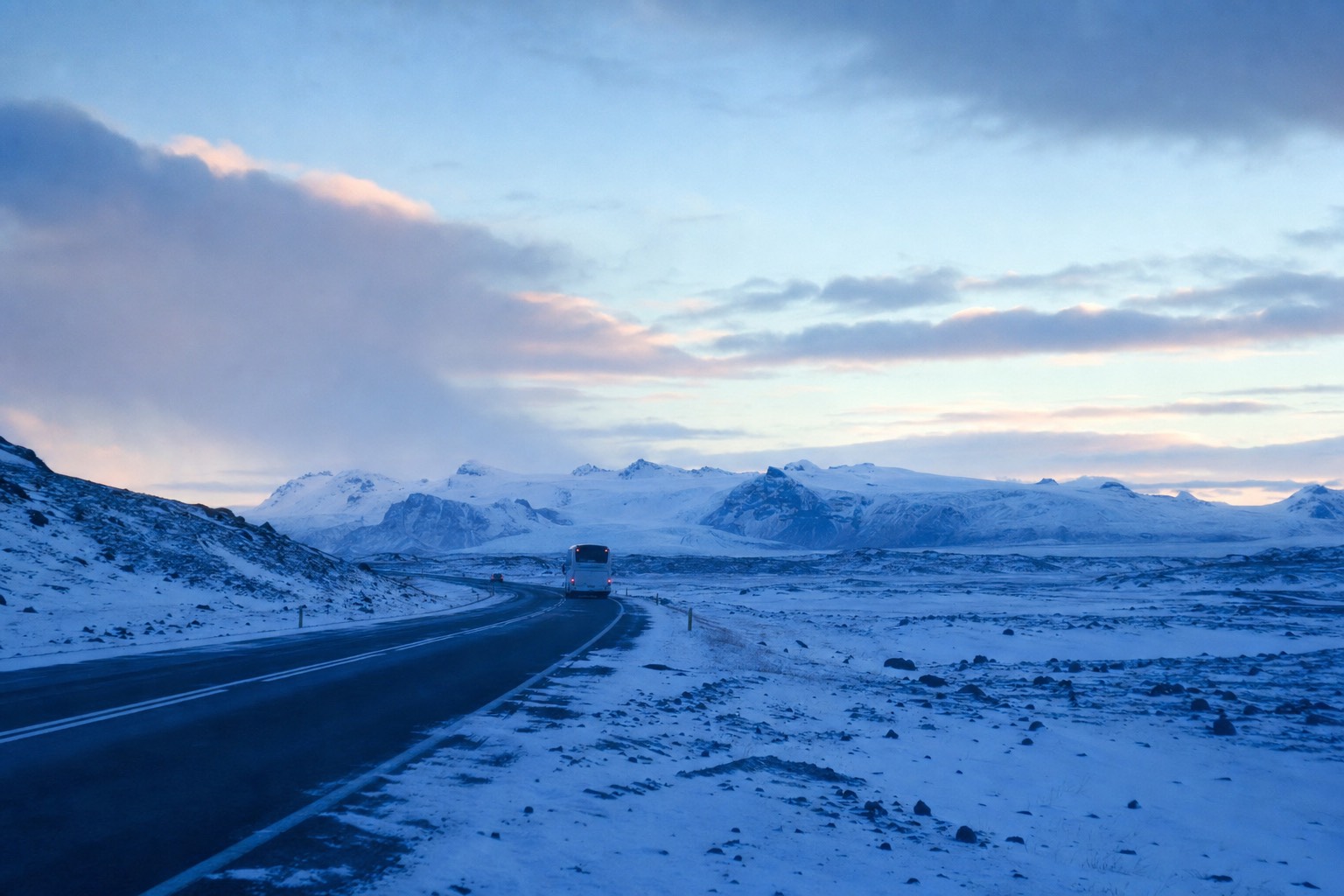
The mistake is always the same, and it is made months before anyone lands. Someone builds a five-day plan in a spreadsheet at home, in a room with a window and a lamp, and every stop gets an hour. Then they arrive on a December afternoon, the light is already going grey in the middle of it, the coach is still an hour short of Vík, and half the spreadsheet quietly dies. Winter in Iceland does not give you a short day so much as a narrow one.
TL;DR. Three full days is the honest minimum and it buys you one region, not the country. Five days is the sweet spot: Golden Circle, the South Coast properly, a glacier or ice cave day and two or three aurora attempts. Seven days is not too long, but only if you go east rather than repeating day trips out of Reykjavík. Jökulsárlón is about 380 km and roughly five hours each way, so it belongs to a multi-day trip, never a day trip.
How many days do you really need in Iceland in winter?
Five full days is the answer for most people. Three works if you accept one region and no spare day for weather. Under three, you are buying a stopover, not a trip. Seven or more only pays off if you use the extra nights to move east towards Jökulsárlón rather than circling back to Reykjavík each evening.
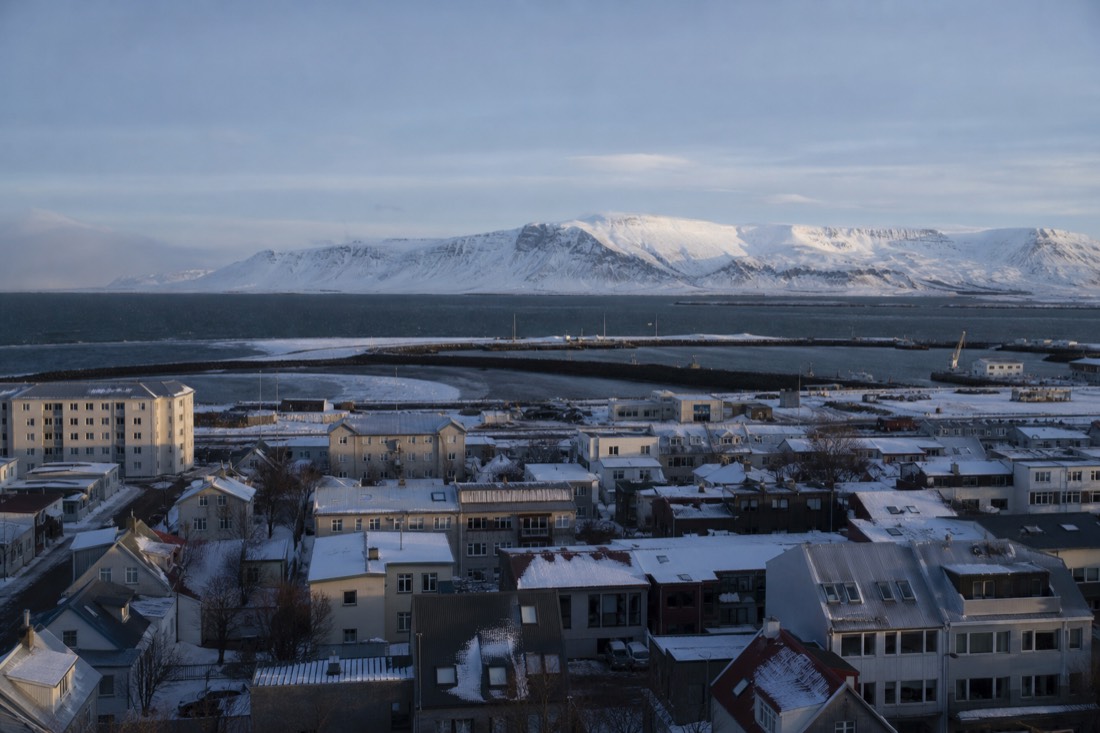
The reason winter arithmetic differs from summer arithmetic is the light. Around the December solstice Reykjavík gets about four hours of daylight, roughly five and a half in January, and about eight and a half by February. A full-day tour therefore does not mean twelve hours of sightseeing. It means a long drive with a handful of stops arranged around a narrow window, and a guide watching the clock at every one of them.
Then add the second constraint, which is weather. Icelandic winter cancels things. Not often enough to ruin trips, but often enough that a plan with no spare capacity will lose something. Wind closes roads on the South Coast, storms cancel aurora coaches, and a bad forecast will move a glacier departure. On a three-day trip, one cancellation removes a third of the itinerary. On a five-day trip it removes a fifth and you rebook.
So my working rule when people ask is this: count the number of headline things you want, add one day for weather, and add nothing for jet lag because the flights land early and you will be fine. Three headline experiences equals five days. Two equals four. If you want the ice cave at Jökulsárlón as well as everything else, you are at six or seven and you should be sleeping out east for part of it, which is a lodging decision as much as a route one. The where to stay in winter guide covers which town serves which part of the plan.
Is 7 days in Iceland too long in winter?
No, but seven days based entirely in Reykjavík is. By day five you will have exhausted the day-trip radius and be repeating drives. Seven days works when nights four and five are spent east of Vík, which turns Jökulsárlón and the Vatnajökull ice caves from a punishing marathon into an ordinary morning.
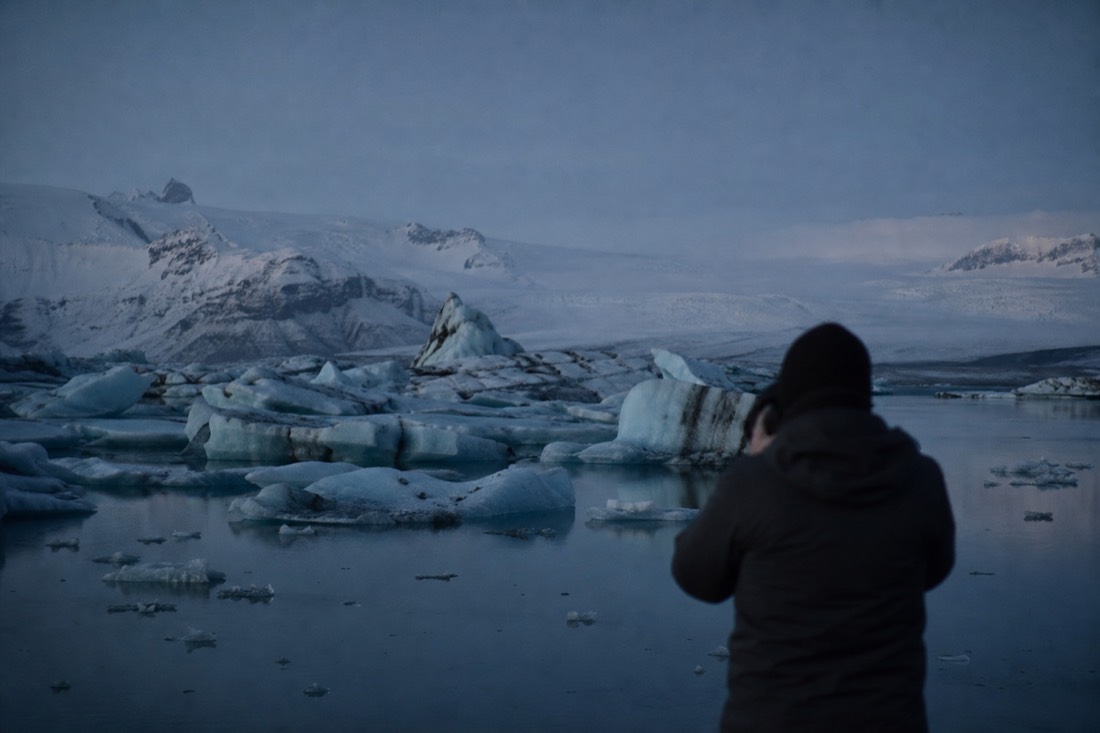
This question gets asked because winter Iceland looks small on a map and people worry about running out of things to do. In practice the opposite happens: the country is large, the winter days are short, and the driving eats far more of the week than anyone expects. Reykjavík to Vík alone is about 190 km, and that is only the beginning of the South Coast.
What actually goes wrong on a long trip is repetition, not boredom. If every night is a Reykjavík hotel, then every day is an out-and-back, and days six and seven end up as a second Golden Circle or a lagoon you have already seen. The fix is structural. Move your base for two nights.
There is also a quieter argument for the seventh day: it is the one that lets you say yes to a clear sky. Aurora needs solar activity and a gap in the cloud on the same night, and neither is bookable. With three nights in the country you might get one plausible window. With seven you will almost certainly get several, and the best time to see the northern lights guide explains why the season, running from late August to late April and strongest from October to February, still guarantees nothing.
Seven days also gives you a genuine rest day. Winter touring is physically tiring in a way summer touring is not: cold, dark, long coach legs, a lot of getting in and out of weather. A Reykjavík day with a swimming pool and no alarm is not a wasted day.
How much actually fits into one winter day?
One full-day tour, or two short ones, plus an aurora attempt in the evening. That is the honest ceiling. A 10 to 12 hour South Coast run is your whole day. A 6.5 hour Golden Circle leaves the evening free. Anything under four hours can be paired with something else the same day.
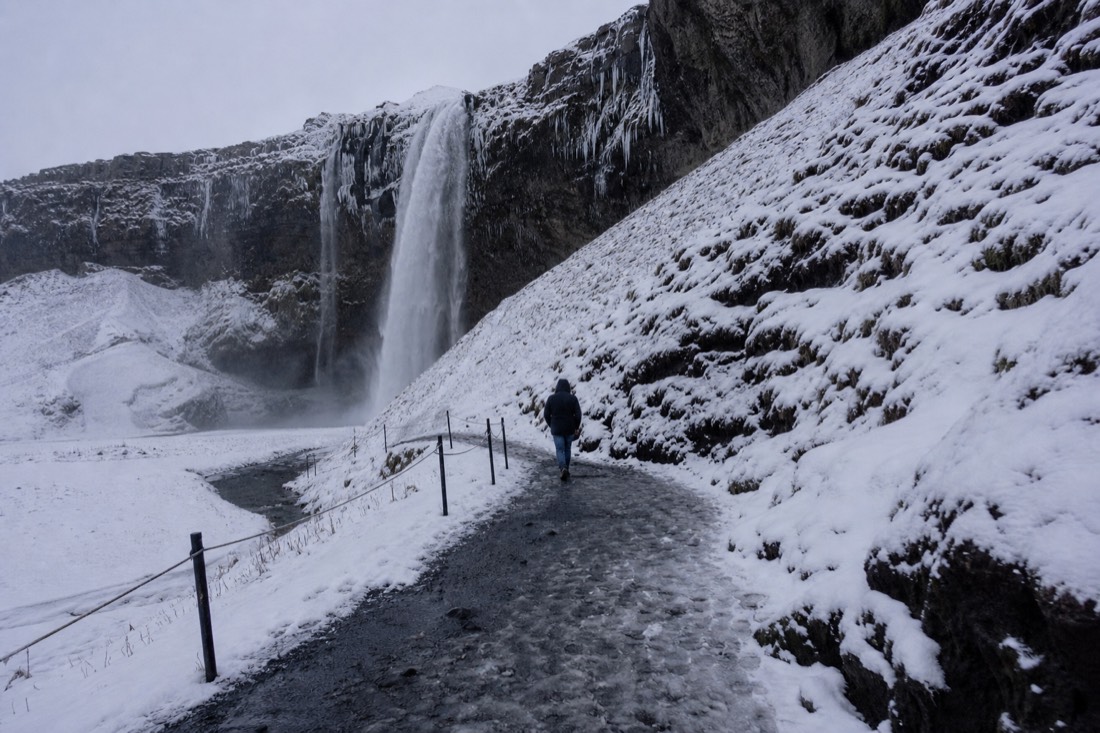
The way to plan a winter week is to treat the day as a small number of slots rather than a list of sights.
| Tour | Typical length | What it takes out of your day | Aurora attempt the same night? |
|---|---|---|---|
| South Coast waterfalls, black sand and glacier | 10 to 12 h | All of it | Optimistic, the return is late |
| Multi-day package leg | Full day plus the night | All of it, and your hotel | Usually built into the package |
| Golden Circle classic | 6.5 h | Morning into mid-afternoon | Yes, comfortably |
| Snowmobiling on Langjökull | 4 h on the tour, plus transfer | Most of the daylight | Yes |
| Blue Lagoon with transfers | 4 h | Half a day, works well on arrival day | Yes |
| Northern lights bus | About 4 h | The evening only | It is the attempt |
| Whale watching from the old harbour | 3 h | Half a day, year-round | Yes |
| Glacier hike on Sólheimajökull | 3 h on the ice | Half a day, plus the South Coast drive | No, you are far from town |
| Ice cave at Jökulsárlón | 2.5 to 3 h underground | Half a day, but you must already be out east | Yes, if you sleep nearby |
| Silfra snorkelling | 2.5 h | Half a day | Yes |
Read that table with the daylight figures beside it and the shape of a winter trip appears on its own. Two half-day tours in December means both of them run in twilight at one end. In February, with about eight and a half hours of light, the same pair is comfortable. The daylight hours guide has the month-by-month numbers and the hour-by-hour version of a solstice day.
What do the 3, 5 and 7-day itineraries look like day by day?
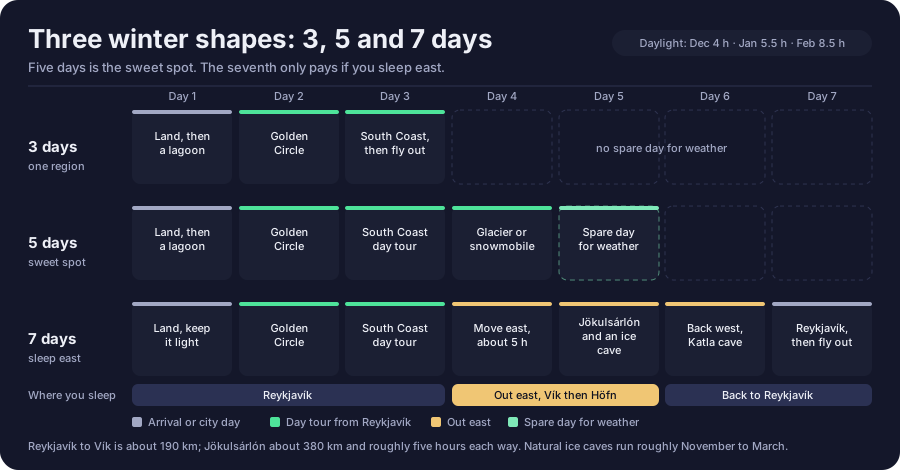
Three days: Golden Circle, South Coast, city and lagoon, with aurora attempts each night. Five days: add a glacier or snowmobile day and a spare. Seven days: the same first four, then move east for two nights to reach Jökulsárlón and a real ice cave before returning along the coast.
These are shapes rather than scripts. Swap the order to follow the forecast, which is what any Icelandic guide would do.
| Day | 3-day trip | 5-day trip | 7-day trip |
|---|---|---|---|
| 1 | Land, Blue Lagoon or Sky Lagoon on the way in, Reykjavík evening | Same, plus an early aurora attempt if the sky is clear | Same, keep it light, you have time |
| 2 | Golden Circle day tour, aurora coach at night | Golden Circle, aurora coach at night | Golden Circle, aurora coach at night |
| 3 | Full South Coast day, late return, fly out next morning | Full South Coast day tour | Full South Coast day tour |
| 4 | Glacier hike or Langjökull snowmobiling, aurora attempt | Drive or transfer east, sleep near Vík or further on | |
| 5 | Spare day: rebook anything the weather took, or Silfra, whale watching, city and pools | Jökulsárlón and a Vatnajökull ice cave, sleep out east | |
| 6 | Return west slowly, glacier hike or Katla ice cave near Vík | ||
| 7 | Reykjavík, Silfra or whale watching, spare capacity, fly out |
The three-day version is deliberately ruthless. It has no spare day, so if the South Coast is cancelled for wind you lose it, and there is no second chance. That is the trade you are making by coming for a long weekend, and it is a reasonable trade if you know you are making it.
The five-day version is the one I would book. Day five doing nothing in particular is not a wasted day, it is the insurance policy that makes the other four work.
How many nights does each headline experience actually need?
Aurora needs at least three nights to be worth calling a plan. Jökulsárlón and a natural ice cave need six days from Reykjavík, or three if you sleep out east. Golden Circle, South Coast, Silfra, whale watching and the lagoons each need one day and no extra nights.
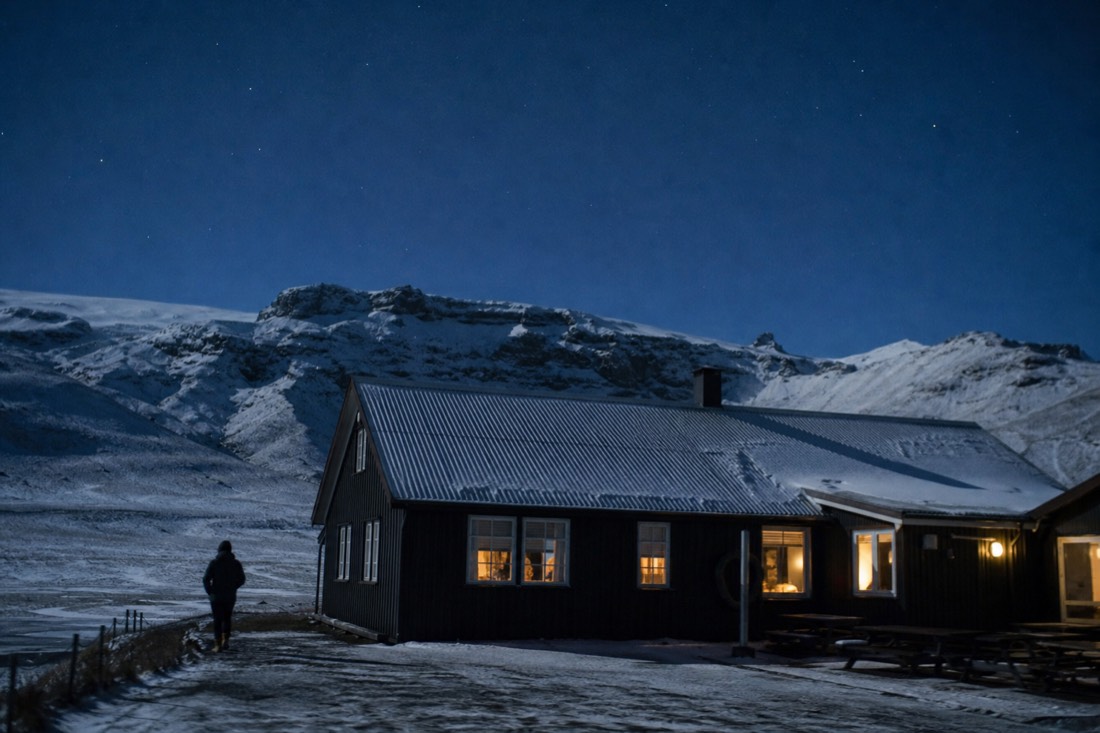
People tend to budget by sight rather than by night, which is where itineraries fall apart. Here is the same list rebuilt around nights, which is the unit that actually constrains you.
| What you want | Nights it realistically needs | Why | Where you should be sleeping |
|---|---|---|---|
| Northern lights | 3 or more | You need solar activity and clear sky on the same night, and neither is bookable | Anywhere outside the city glow, Reykjavík is fine with a coach |
| Golden Circle | 1 | A 6.5 hour loop, back for dinner | Reykjavík |
| South Coast waterfalls and Reynisfjara | 1 | 10 to 12 hours out and back | Reykjavík, or Hella and Hvolsvöllur to shorten it |
| Glacier hike | 1 | Three hours on the ice, the rest is driving | Reykjavík or Vík |
| Katla ice cave near Vík | 1 | Reachable on a South Coast day | Vík or Reykjavík |
| Jökulsárlón and a Vatnajökull ice cave | 2 to 3 | About 380 km each way, roughly five hours | Vík at a push, Höfn properly |
| Silfra snorkelling | 1 | Two and a half hours in the water and out | Reykjavík |
| Whale watching | 1 | Three hours from the old harbour, runs all year | Reykjavík |
| Blue Lagoon or Sky Lagoon | 0 extra | Fits an arrival or departure day | Anywhere |
When does Jökulsárlón justify the drive?
When you have at least six days, or when you sleep east of Vík. Jökulsárlón is about 380 km from Reykjavík and roughly five hours each way, which in January means driving both legs in darkness for a couple of hours at the lagoon. As a day trip it is punishing. As part of a two or three-day package it is the best thing in the country.
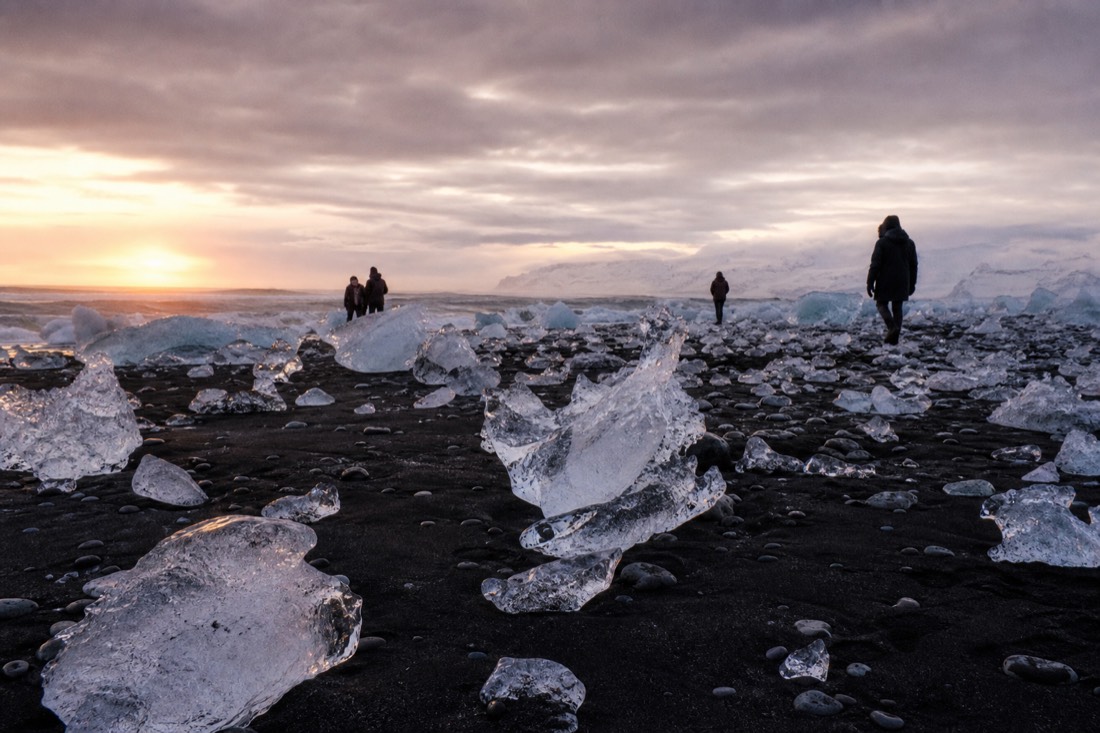
I say this to people constantly and it lands better with the numbers attached. Ten hours of driving around a four to five hour winter day does not leave a visit, it leaves a glance. Worse, the whole thing hinges on the road staying open, and Route 1 east of Vík is exposed.
The natural ice caves are the other half of this. They sit under Vatnajökull, they exist only from roughly November to March, and the meeting point is out there, not in Reykjavík. Which cave you get depends on what the meltwater carved that year, and roughly 30 permitted operators are working the same ice.
So if the cave is the reason you are coming, do it properly: the multi-day winter packages page compares the two and three-day trips that make this sane, and the strongest of them, Troll Expeditions' three-day ice cave, South Coast, Golden Circle and northern lights run at 4.9 across 677 Viator reviews, is available to check for your dates on Viator.
If you would rather keep your days as separate bookings, the ice cave tours page sets out which departures meet at the lagoon and which meet nearer Vík, because that distinction decides where you sleep the night before.
How do you choose between 3, 5 and 7 days?
Start from what you refuse to miss, not from how long your leave allows. One headline experience plus the city is three days. Aurora as the point of the trip is five. A natural ice cave at Jökulsárlón is six or seven, or a package with the eastern nights already inside it.
Almost everybody approaches this backwards. They pick a number of days that fits a flight price, then try to cram their wish list into it and quietly resent the result on day two. Turn it around. Write down the two or three things you would be genuinely disappointed to fly home without, then let the list choose the length, because in winter each of those things costs a whole day and some of them cost a night as well.
Month matters here more than most people expect, and it is not a small adjustment. Around the December solstice Reykjavík gets about four hours of daylight, so a day holds one thing. By February you have roughly eight and a half hours and the same day holds two. That means an identical itinerary needs an extra day in December and does not in March, when the light stretches to about eleven and a half hours. If you have not fixed your dates yet, the best month to visit Iceland in winter weighs the whole season against itself, and the daylight hours guide has the month-by-month numbers.
Whether you are driving is the other axis. The coach network is built around Reykjavík pickups, so a visitor without a car has a fixed menu of day trips and needs the days to use them. A driver can shorten the South Coast by sleeping halfway along it and buy back most of a day, though in January that is a decision to make with your eyes open rather than a clever hack.
| If this describes your trip | Days to book | What it gets you | What you are giving up |
|---|---|---|---|
| One headline experience plus Reykjavík | 3 | The Golden Circle or the South Coast, the city, two aurora nights | Any spare capacity at all, and the glacier lagoon |
| Aurora is the actual reason you are coming | 5 | Three or more attempts, which is the minimum that deserves the name plan | Nothing much, this is the standard shape |
| A natural ice cave at Jökulsárlón is the reason | 6 to 7 | The lagoon in daylight and a cave without a marathon drive | Two nights of Reykjavík, spent out east instead |
| You are travelling in December | Add one day | Cover for four hours of light holding one thing per day | The illusion that a five-day plan behaves like February |
| You are travelling in February or March | 5 is plenty | Two-site days in eight and a half to eleven and a half hours of light | Ice cave reliability as the season warms toward spring |
| You are not hiring a car | 5 | Full use of the Reykjavík pickup network | Early starts at the waterfalls before the coaches arrive |
| You are travelling with children | Add one day | Shorter days, a pool afternoon, no ten-hour coach legs | One headline sight, traded for everyone's mood |
What does one winter day actually look like, hour by hour?
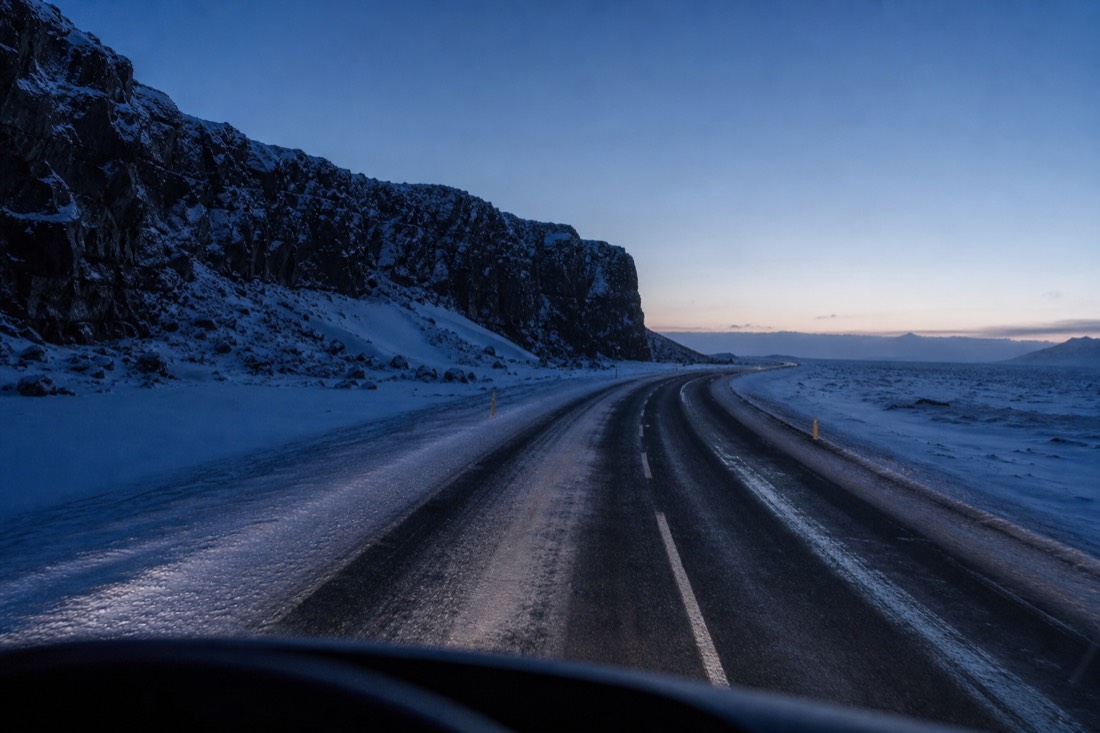
A full South Coast day runs 10 to 12 hours and only about five and a half of them are lit in January. You board in darkness, watch the sky turn navy on the first leg, get your best light in the middle of the day, and drive the last two hours home in the dark again. Nobody warns you how much of it is windscreen.
Here is that day laid out as a shape rather than a timetable, because the clock times move with the month and the operator. Treat every duration below as a planning allowance, not a promise. The listing you book is the one that tells you when it leaves.
| Point in the day | Where you are | The light | What is being decided |
|---|---|---|---|
| Pickup, well before first light | A Reykjavík hotel or a designated bus stop | Full dark | Whether the road east is open at all |
| First leg, allow an hour and a half or more | Route 1, farmland, occasional headlights | Dark turning navy | The guide's running order for the day |
| First outdoor stop | A waterfall, ice underfoot, wind at the viewing platform | Blue twilight, cameras struggling | How long the group can stand still in that wind |
| Mid-morning to midday | The second waterfall or the black sand at Reynisfjara | The best light you will get, low and orange | Whether Reynisfjara is safe today, and how close anyone goes |
| Early afternoon | A glacier tongue or the last coastal stop | Flat and fading fast | Whether there is time for one more stop or not |
| Mid-afternoon | Back on the coach heading west | Going, then gone | Nothing, this is the part nobody photographs |
| Two hours of dark driving | Route 1 again, everyone quiet or asleep | Dark | Whether tonight is worth an aurora attempt |
| Evening, back in the city | Reykjavík, cold, hungry | Dark, and possibly clear | Dinner, or the aurora coach, rarely both |
Read that against the daylight figures and the point lands on its own. Roughly five and a half hours of January light spread across a 10 to 12 hour day is not a shortage of sights, it is a surplus of driving, and everyone underestimates how tiring the driving part is. The stops themselves are short by design, partly because of the light and mostly because standing in Icelandic wind for forty minutes is genuinely unpleasant.
Two practical consequences follow. First, do not book anything with a fixed time on a South Coast evening, because the return depends on the road and the weather. Second, a day like this pairs badly with an aurora attempt on the same night, which is why the northern lights coach usually belongs to a Golden Circle day instead. The South Coast tours page sets out which versions of the day are the long ones and which cut the route shorter, and what a northern lights tour is actually like describes the evening version of the same experience.
Is a multi-day package better than booking separate day tours?
For anything east of Vík, yes, and it is not close. A package sleeps you out there, so the glacier lagoon and the ice cave become a morning instead of a ten-hour driving day. For the Golden Circle and the South Coast, separate day tours from Reykjavík are simpler, cheaper to assemble and easier to move.
The honest way to compare the two is to stop looking at the fares and start counting nights and drives. Doing the South Coast, an ice cave and the Golden Circle as three separate outings from the capital means three long out-and-back journeys and three more hotel nights in Reykjavík. The same three inside a package means the driving happens once, in one direction, and the bed at the end of each leg is already booked.
Where the package loses is flexibility, and that loss is real. You are on somebody else's route on somebody else's schedule, you cannot swap the order to chase a forecast, and if the weather takes one leg it takes it inside a trip you have already committed to. Day tours give you the opposite trade: you decide each morning, you can move a booking, and free cancellation up to 24 hours before departure applies to every listing on this site with the single exception of the Blue Lagoon transfer product at two days.
There is also a question of who does the planning. Beds in the glacier country are scarce in cave season, which is exactly when everybody wants them, and finding them yourself is the fiddliest part of a winter itinerary. A package removes that problem entirely. The multi-day winter packages page compares the two and three-day options, and where to stay in Iceland in winter covers what the eastern beds look like if you would rather arrange them yourself.
| The thing you are comparing | Separate day tours from Reykjavík | Multi-day package |
|---|---|---|
| Where you sleep | The same city hotel every night | Moves east with the route |
| The drive to the glacier lagoon | About 380 km and roughly five hours each way, in one day | Split across the trip, in daylight where possible |
| Time actually spent at Jökulsárlón | An hour if the day goes well | A proper morning |
| The ice cave meeting point | Out east, so you must already be out east | Built into the itinerary |
| If weather takes one leg | Rebook it from the city, easy | The operator reworks it, and you go along with that |
| Changing your mind on the day | Yours to make | Not yours to make |
| Hotel nights you book yourself | All of them, including the scarce eastern ones | Included, which is most of the value |
| Best suited to | Golden Circle, South Coast, city days, aurora | Anything past Vík, and first-timers short on planning time |
What pacing mistakes ruin a winter itinerary?
Four, in the order I see them: putting the aurora coach on the last night, stacking two full-day tours back to back, treating Jökulsárlón as a day trip, and planning to clock time instead of to daylight. Each one is fixed for free, before you fly, by moving something in the calendar.
The last-night aurora booking is the one that hurts most, because the fix costs nothing and the failure is total. Sky decides this, not schedule. If you have one attempt and you spend it on your final evening, a cloudy night ends the matter and there is no second chance. Book the first plausible night instead, keep the rest of the week open, and use the free retry that several operators offer. Three nights in the country is the honest minimum for calling any of this a plan.
Stacking is the second, and it is a mistake made by enthusiastic people. Two 10 to 12 hour days in a row, in five and a half hours of January light, will flatten most travellers by the second afternoon, and the flattening shows up as not bothering to get off the coach at the last stop. Put a short day between the long ones. A 6.5 hour Golden Circle loop or three hours of whale watching from the old harbour is a rest day that still counts as a day out, and is the Golden Circle worth it in winter makes the case for where it fits.
The third I have written about above and will say once more plainly, because people keep trying it. Ten hours of driving wrapped around a short winter day leaves you a glance at the lagoon, not a visit.
The fourth is subtler and it catches organised people hardest. A spreadsheet built on clock times assumes the day is a container of hours, when in winter it is a container of light, and the two are not the same size. Anything you want to see properly has to sit in the middle of the day, which means one thing per day in December and two in February. Everything else is driving in the dark, and the dark drives are not a failure of planning. They are the plan. What I wish I knew before my first Iceland winter is the shorter, more personal version of this entire section.
| The mistake | What it does to your trip | The fix |
|---|---|---|
| Aurora coach booked for the final night | One cloudy sky and the trip's headline never happens | Go on the first clear night, keep later nights spare |
| Two full-day tours back to back | Day two happens through a coach window | Put a 6.5 hour or a 3 hour day between them |
| Jökulsárlón as a day trip in January | Ten hours driving, about an hour at the lagoon | Sleep east, or book it as a package |
| Planning to clock time, not to daylight | Stops land in the dark and the photos never come | Anchor the main sight to the middle of the day |
| No unbooked day in five | One cancellation removes something permanently | Leave day five open and rebook into it |
| Big tour on the morning of your flight | A late return or a closed road becomes a missed plane | Keep the last day for the city, the pools or a lagoon |
| Dinner reservation on a South Coast night | You eat in a hurry or you do not eat | Eat late and unbooked, the city is used to it |
| Driving the long legs yourself in December | The tiring part of the day becomes your job | Take the coach seat and sleep on the way home |
How do you build weather slack into a winter itinerary?
Leave one unbooked day in five, put the flexible things at the end, and check road.is on the morning of any drive. Operators reschedule or refund their own weather cancellations, and every listing here allows free cancellation up to 24 hours before departure, with one exception on the Blue Lagoon transfer product at two days.
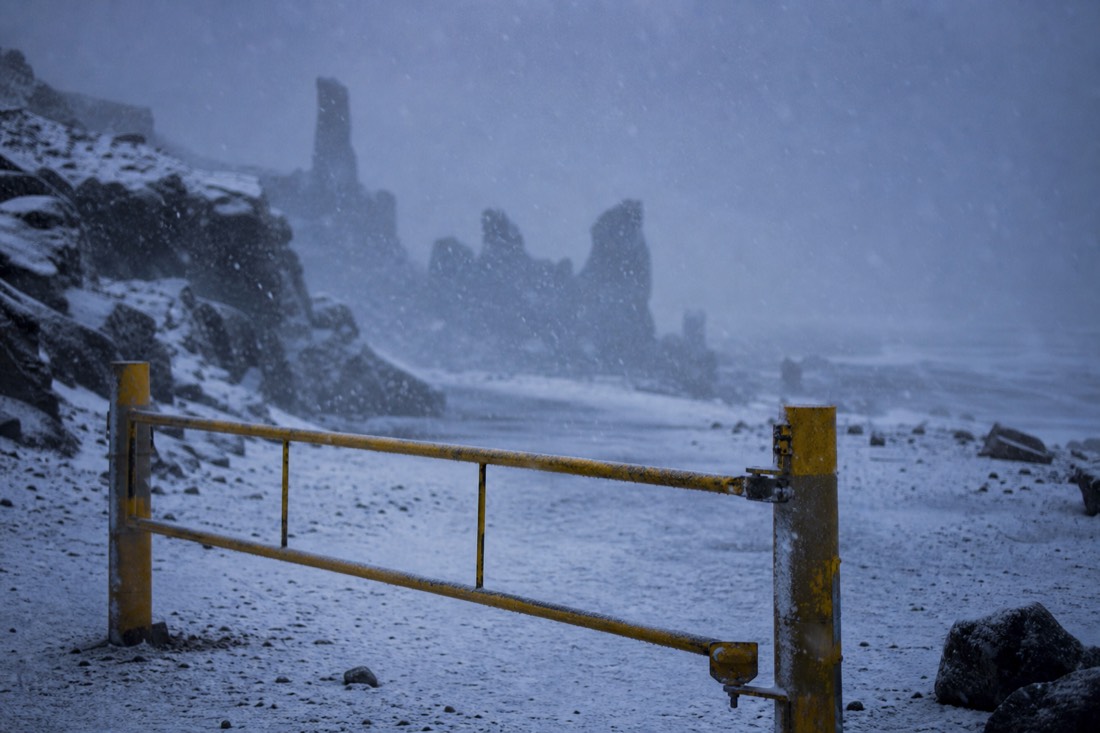
Slack is not pessimism. It is the thing that lets you enjoy the forecast rather than fear it. Book the immovable items early in the trip: the multi-day package, the ice cave, anything with a fixed meeting point far from town. Keep the swappable items, Silfra, whale watching, the lagoons, a museum afternoon, for the back end, where they can absorb a cancellation.
Two habits make winter travel here calm rather than tense. The first is checking road conditions every morning at road.is, or ringing 1777, before you commit to a drive. The second is leaving a travel plan with safetravel.is and putting the 112 Iceland app on your phone, which takes two minutes and is what every local would tell you to do.
Whether you self-drive or hand the driving over changes how much slack you need, and in winter that is a bigger decision than it looks. Self-drive versus guided tours sets out both cases honestly, and the account in the day the weather cancelled everything is what a bad-forecast day genuinely feels like from inside it.
One last thing on ordering. Do not put your one aurora coach on the final night. Put it on the first clear night that appears, and keep the rest of the week available to try again. Sky, not schedule, decides this one.
3-Day Ice Cave, South Coast, Golden Circle and Northern Lights
Have your day count settled? Check the package dates next: for anything east of Vík it is the version that already contains the nights, the drives and the weather reshuffles, and it cancels free up to 24 hours out.
72h · en · Hotel pickup offered; details on the listing
Scheduled departure dates. Availability and final price are confirmed on Viator.
None of these experiences matches that choice. Adjust your preference or reset to the general recommendation.
Compare Options And Plan Your Trip
- Three days, one region
- The 6.5 hour circle plus the city and aurora nights.
- Five days, the sweet spot
- Circle, full South Coast, a glacier day and a spare.
- Seven days, going east
- Nights four and five out east with the cave and lagoon built in.
- Separate days, no package
- The two-day cave-and-lagoon trip that still moves your bed east.
- A stopover under three days
- The lagoon-on-arrival-day version that fits a short stop.
Before Booking
The Northern Lights are a natural phenomenon and cannot be guaranteed by the operator. The hotels are in prime locations to maximize chances of seeing them. Not included: Lunch and Dinner; Hiking Boots Rental (3,000 ISK); Waterproof Jacket Rental (1,750 ISK)