Which Ice Cave Tour Is Best in Iceland? 2026/27 Season
Around 30 companies hold ice cave permits in Iceland, so the blue cave changes every winter. How Vatnajokull, Katla and Langjokull compare on the day.
 Written with Björn Einarsson, Icelandic guide & winter tour specialist
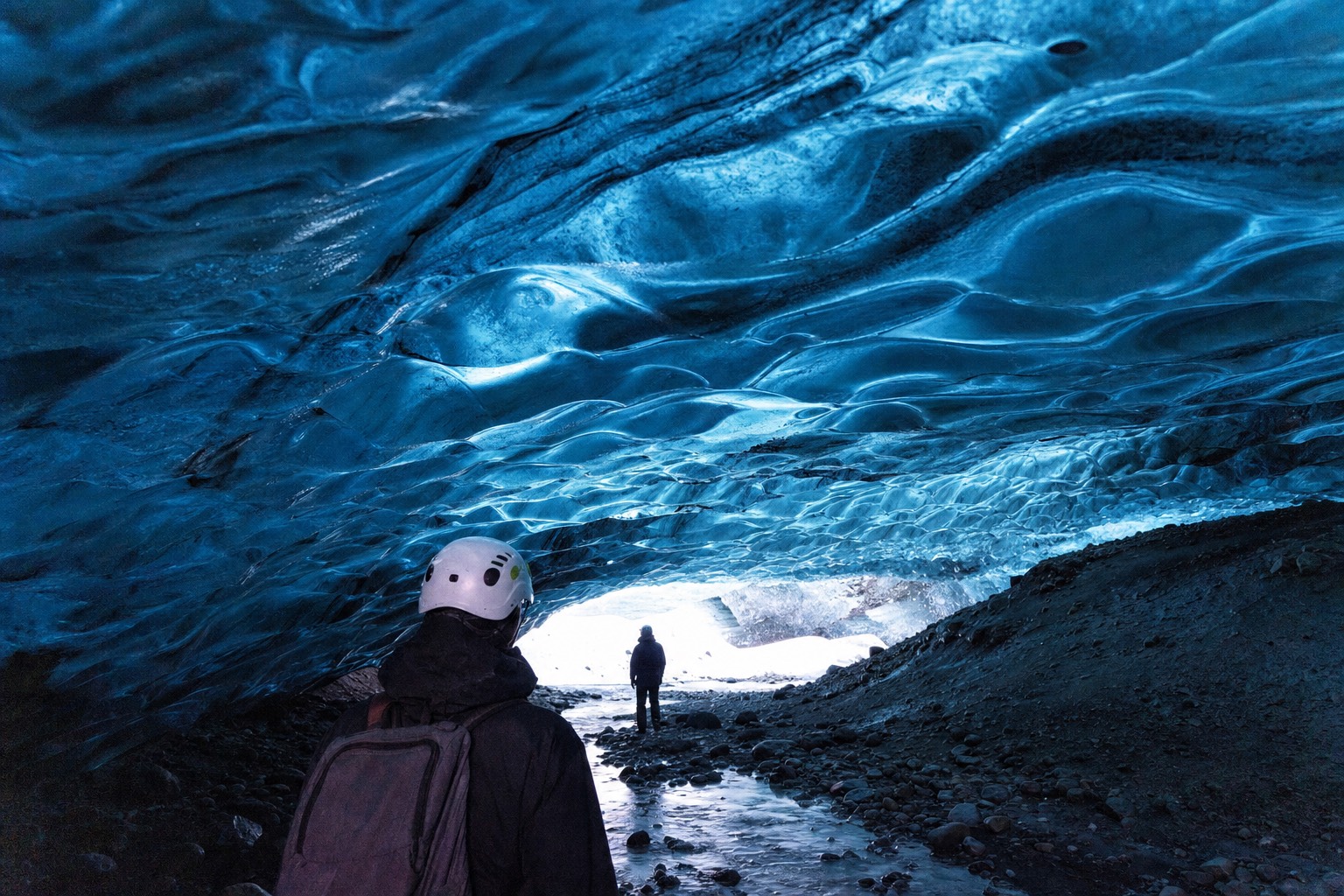
The floor inside a good cave is wet, not frozen, and it drips on your hood the whole time you are standing there. That surprises people. They expect a still, dry, sculpted room and they get a moving, groaning, melting one with a torch beam bouncing blue off the ceiling.
TL;DR: There is no single best ice cave in Iceland, because there is no single ice cave. Around 30 companies hold cave permits, the natural caves are re-carved by meltwater every year, and the cave you stand in this January may not exist next January. The real choice is between three: the natural blue caves under Vatnajokull, met at Jokulsarlon about five hours from Reykjavik; the Katla cave under Myrdalsjokull, met at Vik; and the man-made Langjokull tunnel, open all year. Pick on distance and season first, cave romance second.
Which ice cave in Iceland is best to visit?
For most winter visitors, the natural Vatnajokull caves reached from Jokulsarlon are the best ice caves in Iceland: the biggest glacier, the bluest ice, the real seasonal article. If your trip is short or Reykjavik-based, the Katla cave near Vik is the better use of one day. Langjokull's tunnel is the all-year fallback.
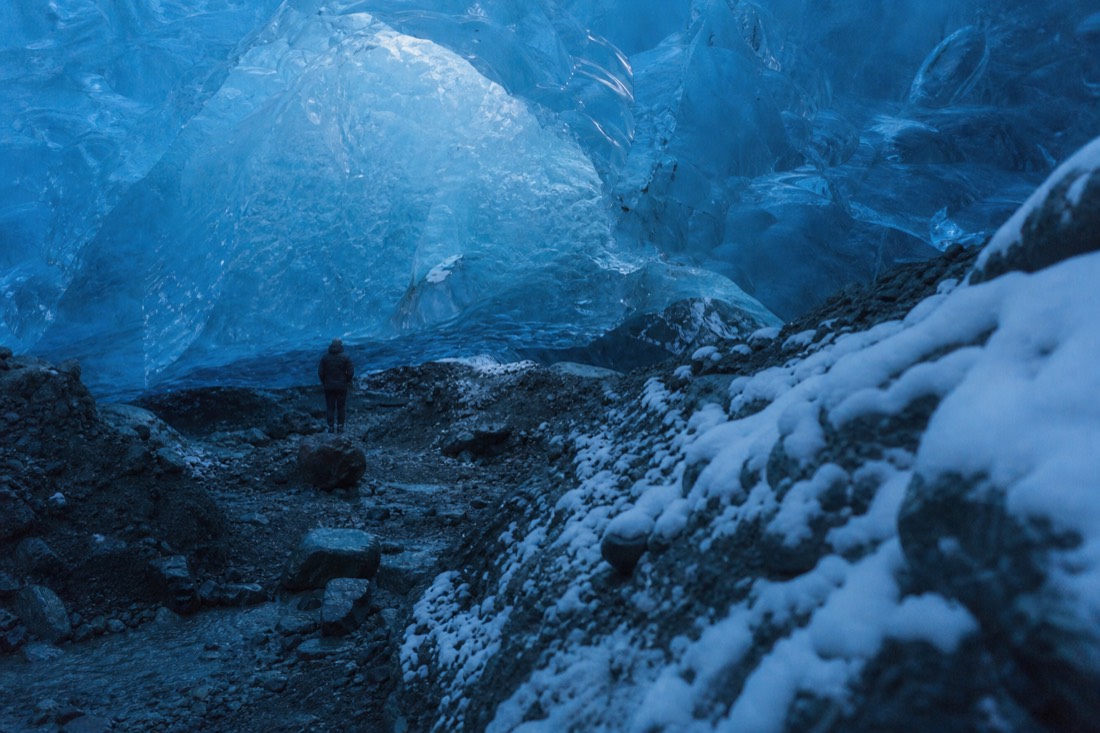
That ranking holds because of what a natural cave actually is. Meltwater bores a channel through a glacier in summer, the channel drains, the roof refreezes, and for a few cold months you can walk into it. Vatnajokull is where the permit holders concentrate their cave operations, which is why the Jokulsarlon meeting point has become the default. The colour comes from compression: air squeezed out of the ice over centuries, leaving something that reads as blue to your eye and sapphire to your camera.
Katla is a different proposition and a fair one. The cave sits under Myrdalsjokull, above the volcano that gives it its name, and the ice there is streaked with black ash bands from old eruptions. It is not as blue. It is far closer, and it can be reached and returned from in a day that does not start in the dark and end in the dark.
Whether any of it is worth doing at all is a separate question, and I have answered it properly on is the ice cave in Iceland worth it rather than fudging it here. This page is about which one.
Why is there no single "best" ice cave in Iceland?
Because "natural blue ice cave" is a category, not a product. Around 30 Icelandic companies hold permits to run cave tours, and each one works whichever cave its guides found and judged safe that autumn. Two operators selling the same tour name on the same date may take you to two different caves.
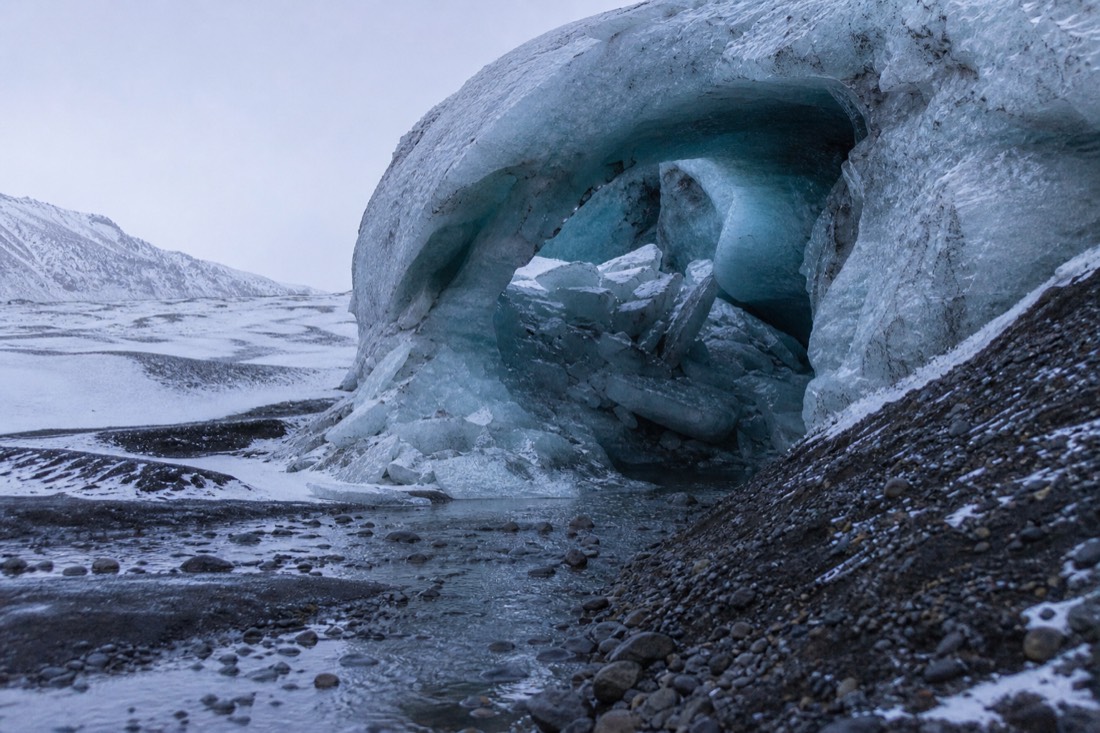
This is the part almost nobody tells you before you book, and it changes how you should read the listings. When a page says "the Crystal Cave" or "the Sapphire Cave", that is usually a nickname the operator gave a specific chamber for a specific winter. The following season, meltwater may have collapsed the roof or filled the entrance, and the same operator will be running a different cave under a different nickname. Guide to Iceland's background on ice caves makes the same point about how short-lived these formations are.
So the useful questions are not "which cave has the best photos". They are: which glacier, which meeting point, which season, and does the operator scout and re-scout. A company with permits and a guide team that checks caves through the autumn will move you to a better chamber without announcing it. A cheap reseller will take whatever slot is left.
It also explains why photos in listings look better than what you see. Those images are real, and they were taken in a real cave, quite possibly one that no longer exists. That is not fraud, it is just how glacial ice behaves.
The other consequence: you cannot sensibly walk into one on your own, whatever a hire car makes you feel. I have laid out why on can you visit ice caves without a tour, and the short version is that the permit system and the roof are both against you.
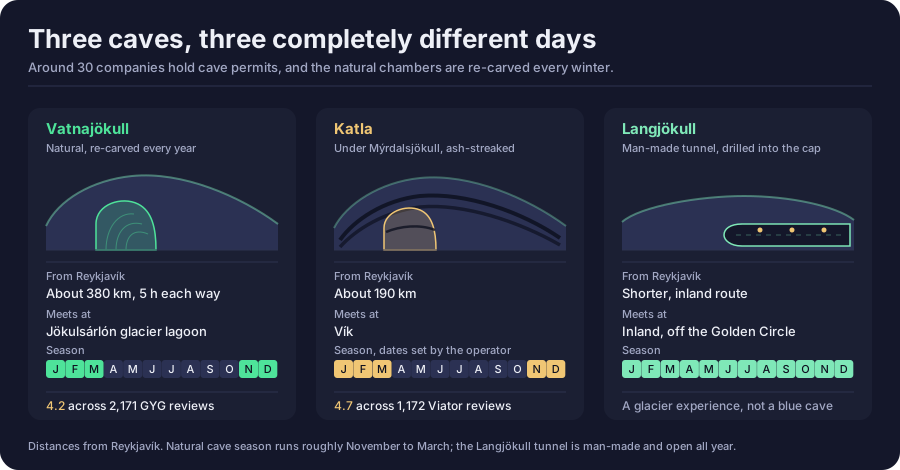
How do Vatnajokull, Katla and Langjokull compare on logistics?
Vatnajokull caves are met at Jokulsarlon, about 380 km and five hours from Reykjavik each way. Katla is met at Vik, about 190 km out. Langjokull's tunnel sits inland off the Golden Circle and runs all year. The cave visit itself is short in every case; the driving is what fills the day.
| Vatnajokull natural caves | Katla ice cave | Langjokull tunnel | |
|---|---|---|---|
| Cave type | Natural, re-forms each year | Natural, ash-streaked | Man-made tunnel, drilled |
| Meeting point | Jokulsarlon glacier lagoon | Vik | Inland, off the Golden Circle |
| Distance from Reykjavik | About 380 km, about 5 h each way | About 190 km | Shorter, inland route |
| Season | Roughly November to March | Winter, dates set by the operator | All year |
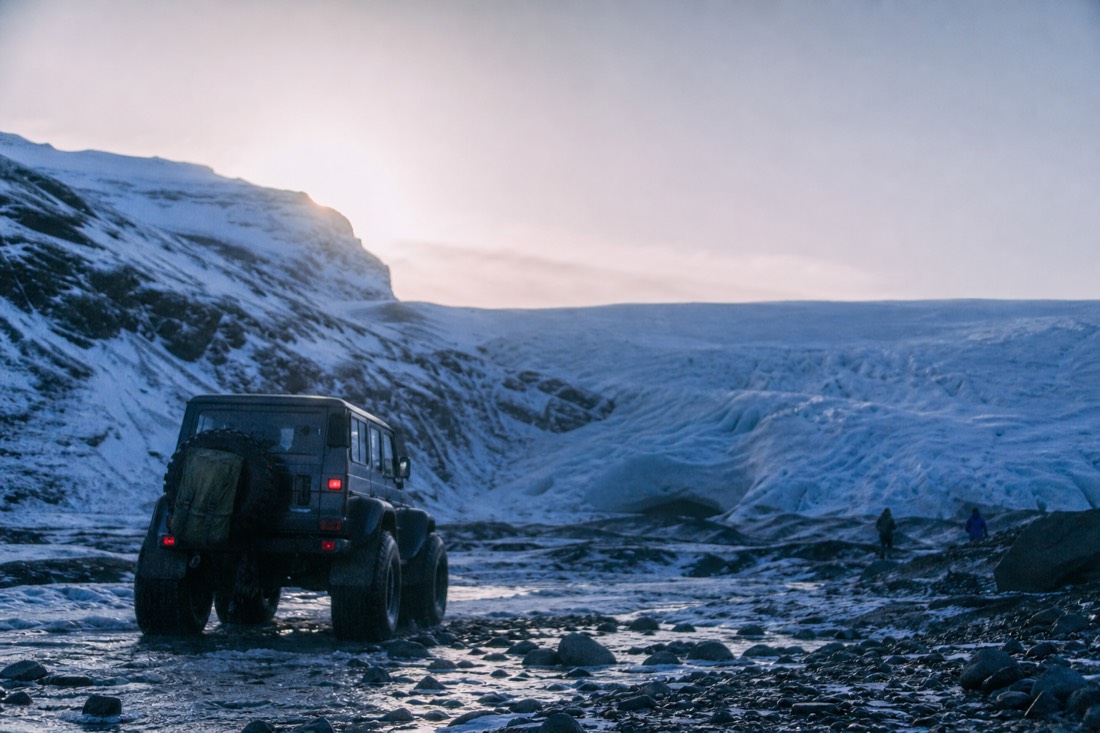
| Transfer to the ice | Super jeep over rough track | Super jeep from Vik | The operator's own glacier vehicle |
| Flagship rating | 4.2 across 2,171 GetYourGuide reviews | 4.7 across 1,172 Viator reviews | Sold as a glacier experience, not a blue cave |
Read that distance row twice. Jokulsarlon and back inside one winter day means both legs in the dark, on a road that can close behind you, which is why I check road.is before I agree to that drive rather than the night before. If you are weighing up doing it in a hire car at all, my self-drive versus guided guide goes through the specifics, and this is exactly the trip where a two or three-day winter package stops being an indulgence and starts being the sane option.
Langjokull is the odd one out and deserves credit for it. Into the Glacier is a tunnel bored into the ice cap, lit, floored and stable, which means it runs in July as happily as in January. The ice is real glacier ice. The cave is not natural, and any operator who implies otherwise is selling you something they should not.
Which ice cave should you pick for your trip?
Pick Katla if you have one free day and are staying in Reykjavik. Pick Vatnajokull if the cave is the point of your trip and you can give it two days. Pick Langjokull if you are travelling outside the natural cave season, or if a low, wet, uneven natural chamber does not suit your group.
| If you are... | Go to | Because |
|---|---|---|
| Based in Reykjavik with one spare day | Katla, from Vik | The only natural cave you can reach and return from without an epic day |
| Coming to Iceland for the cave itself | Vatnajokull, from Jokulsarlon | The bluest ice and the widest choice of chambers |
| Travelling in summer or early autumn | Langjokull tunnel | Natural caves do not exist then, and honest operators will say so |
| Nervous about crouching, wet floors, tight gaps | Langjokull tunnel | Level floors, lighting, and a predictable route |
| Already booked a South Coast day | Katla add-on | Same road, no second long drive |
| Travelling with older parents or teenagers | Katla or Langjokull | Shorter transfer, less time on rough track |
| Chasing photographs above all else | Vatnajokull, mid-season | Deeper blue, and fewer ash bands through the ice |
If the cave is the reason you are coming, book the Jokulsarlon one properly rather than as an afterthought: the ice cave tours page sets the options against each other, and the most-reviewed of them is available to check for your dates on GetYourGuide, where the live price and the cancellation terms sit on the operator's own listing.
For the Katla version, the thing to look at is whether the day also carries the waterfalls and the black beach, because most people only drive that road once. Our South Coast day tours rate 4.8 across 20,757 reviews as a group, and the Katla cave departure from Vik sits at 4.7 across 1,172 Viator reviews on its own.
What is the best month to visit the ice caves in Iceland?
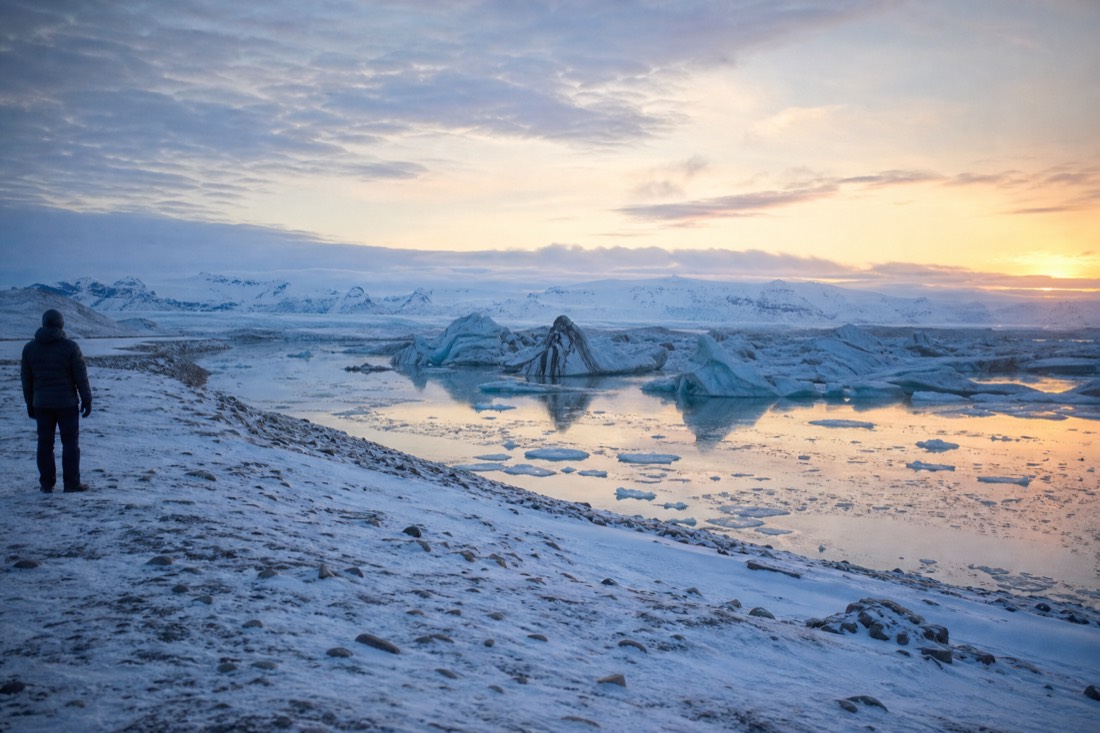
January and February are the best months for Iceland's natural ice caves. The ice has had a full cold spell to refreeze, the caves are stable, and the season runs roughly November to March. November is a gamble on a mild autumn. Late March can end early if it warms.
| Month | Reykjavik daylight | Natural cave conditions |
|---|---|---|
| November | About 6.5 h | Season opening, caves still being scouted and cleared |
| December | About 4 h at the solstice | Open, but the shortest days of the year to work with |
| January | About 5.5 h | Deep cold, the reliable heart of the season |
| February | About 8.5 h | Cold ice and usefully more daylight, the sweet spot |
| March | About 11.5 h | Still running, but a warm spell can close a cave early |
February is the month I would choose without hesitating. You get ice that has been frozen hard since November and about eight and a half hours of light in Reykjavik, which matters enormously on a day that involves a five-hour drive at each end. December gives you around four hours at the solstice, and a Jokulsarlon day in December is mostly headlights.
The comparison across the whole winter, not just for caves, sits in the best month to visit Iceland in winter guide, which weighs aurora odds and road reliability at the same time.
How long is the ice cave hike, and how hard is it?
Short. The flagship Jokulsarlon cave tour runs about 2.5 to 3 hours in total, and most of that is the super jeep transfer over rough moraine track, not walking. The approach on foot is a brief stretch of uneven ice and gravel, and each listing states its own distance and time inside.
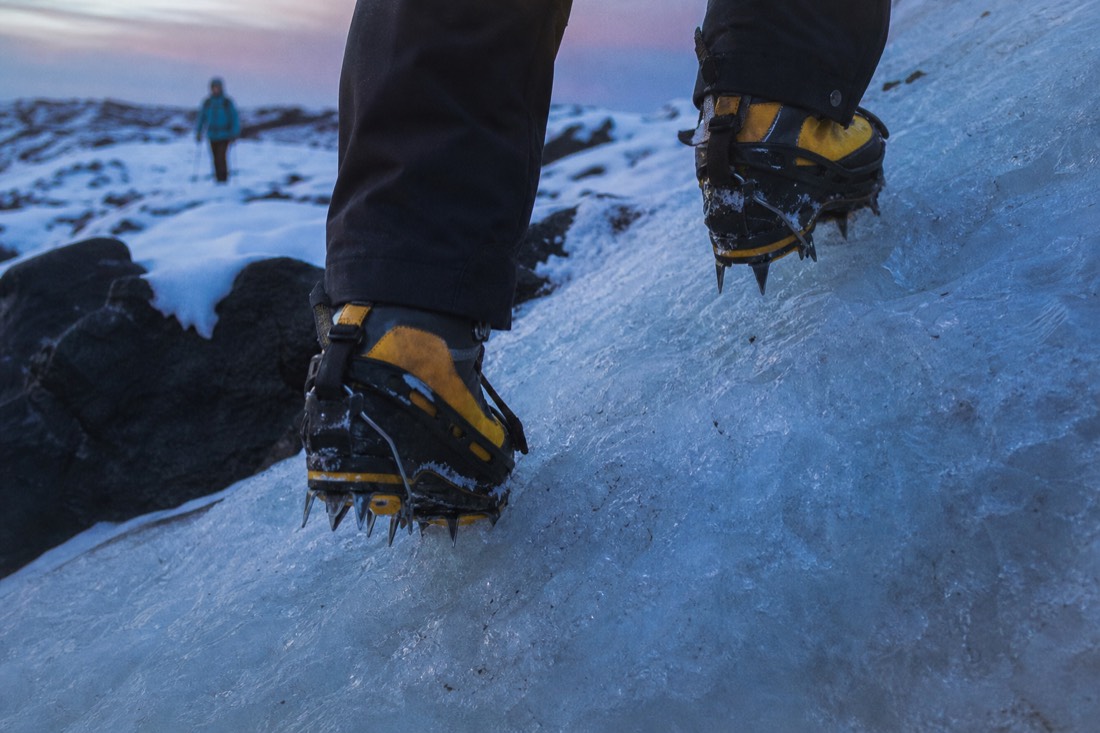
I am deliberately not giving you a distance in kilometres, because it changes with the cave and any number I invented would be worse than no number. What I can tell you is the shape of it: you meet, you sign in, you are handed a helmet and crampons, you ride out, you walk a short way, and then you are inside for a while with a torch. People expecting a hike are often surprised at how little walking there is. People expecting a stroll are surprised by the crampons.
The surface is the difficulty, not the distance. Crampons on hard glacier ice feel secure once you learn to plant your foot flat and stamp rather than roll through the step. Inside the cave the floor is often wet, sometimes running, and low sections can mean bending double. Anyone with a knee that does not like uneven ground should say so at the meeting point rather than halfway in.
Fitness requirements are modest, and every operator sets its own minimum age for a natural cave. The listing states both, and the listing is the authority, not me. If you want the inside of one described honestly before you commit, inside a Vatnajokull crystal ice cave walks through a visit from the meeting point onwards.
What do you actually see inside, and is the ice really blue?
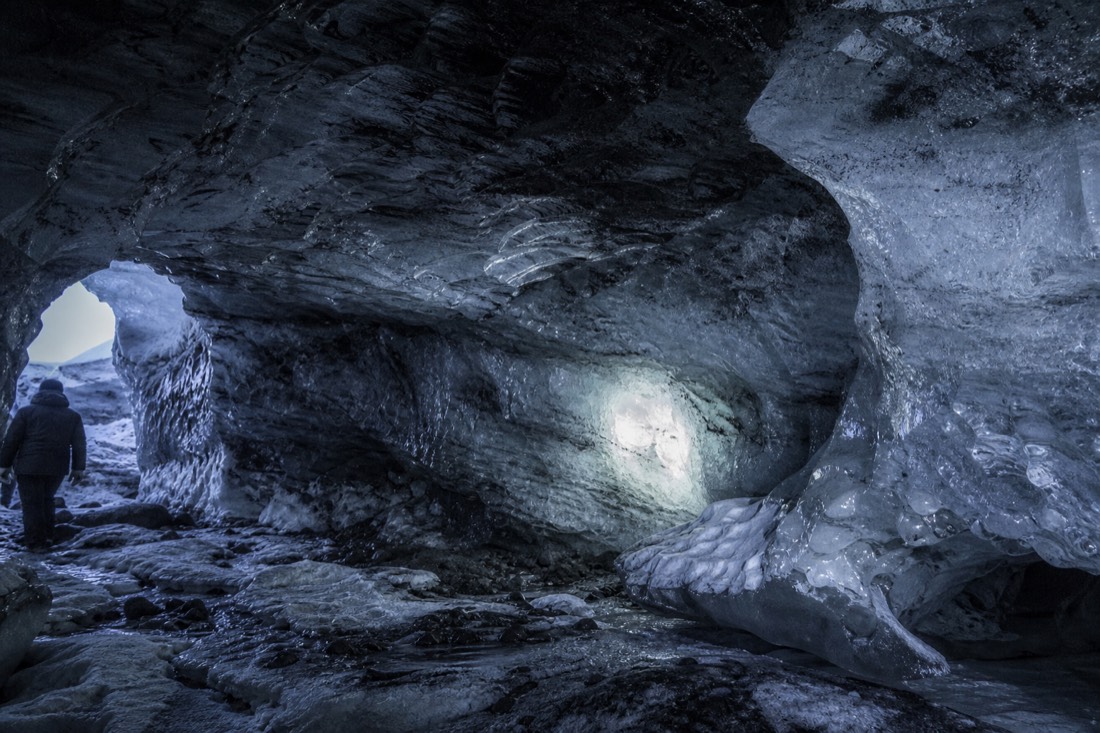
Yes, but not the electric blue of the listing photos. Real cave ice reads as deep aquamarine in flat light and glows properly when sun hits the roof from outside. Ash layers from old eruptions run through it in black bands. On a grey day the colour is muted, and that is normal.
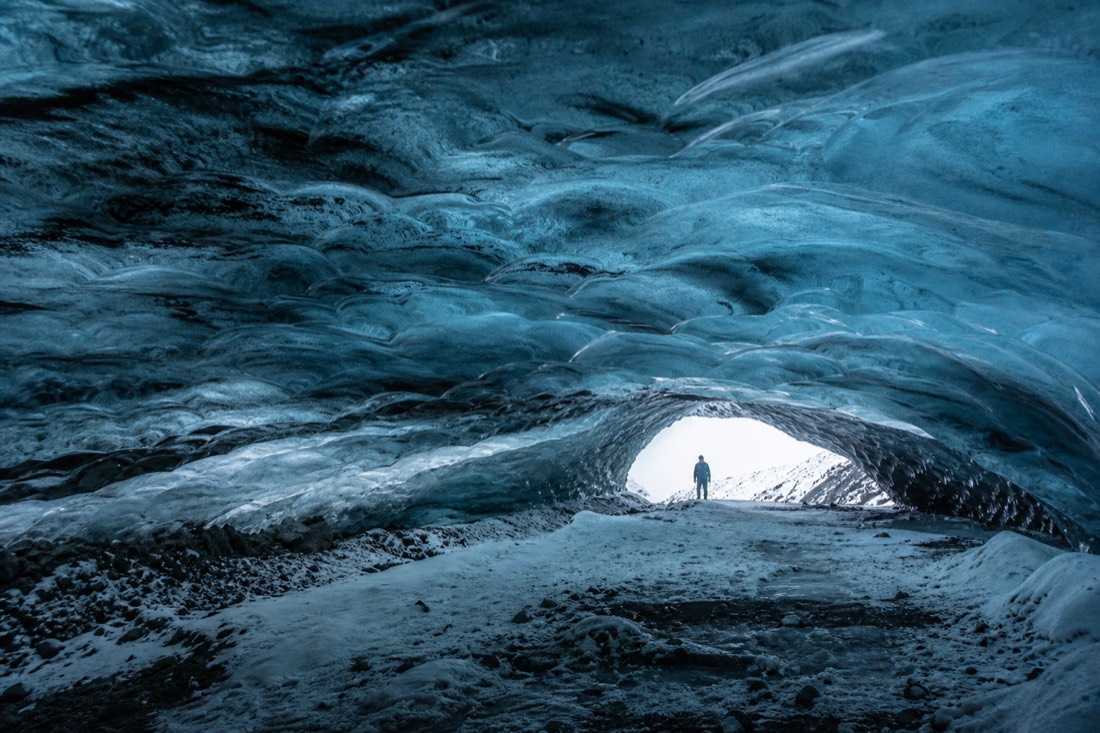
The blue is physics rather than marketing. Glacial ice under centuries of pressure has almost no trapped air left, so it absorbs the red end of the spectrum and lets blue through. Thick, old, compressed ice looks bluest. Fresh snow on the roof kills the effect, and so does thick cloud, which is why two people can visit the same chamber a week apart and come away with completely different impressions.
The ash is the other thing nobody expects. Iceland's glaciers sit on top of volcanic systems, and every big eruption laid a dark stripe across the ice that is now buried and folded into it. Katla's cave shows this most dramatically. Some visitors find the striping more interesting than the blue.
Sound is what I remember. A cave is not silent. There is running water somewhere under the floor, the occasional deep crack, and the muffled quality of standing inside several metres of ice. Photographers should bring a wide lens and expect to shoot at higher ISO than they think, because the light coming through the roof is dimmer than your eye suggests.
What actually decides how blue the ice looks on the day you go?
Four things decide it, and only one of them is the cave itself: how old and compressed the ice is, how thick the roof over your head is, what the sky outside is doing, and whether snow has fallen on the glacier recently. A thin roof under bright overcast gives the strongest blue. Fresh snow flattens it.
Colour is the thing people book for and the thing nobody can promise them, so understanding the variables is worth ten minutes before you pick a date. Old glacial ice reads blue because centuries of pressure have squeezed the air out of it, leaving a solid that absorbs the red end of the spectrum and passes the blue. That part never changes from cave to cave. What changes is how much light reaches the ice, and from which direction.
The roof does most of the work. Where a chamber has only a thin ceiling of ice above it, daylight comes straight through and lights the whole thing from behind, which is the glow you see in every good cave photograph. Under a thick roof the same ice looks grey until somebody puts a torch on it. Guides know which chambers behave this way, and that is one of the quiet reasons an operator who scouts its own caves through the autumn is worth paying for.
Weather then works against you in two separate ways. Heavy cloud simply reduces the light arriving at the glacier surface. Fresh snow is the bigger problem, because it lies on the roof like a blanket and blocks the light path completely, so a chamber that glowed last week can read white and dull this week. Wind usually strips that surface snow back within a few days, which is why guides who have been on the ice all season are relaxed about a snowy forecast and worried about a warm one.
The last variable is you. Torches and phone screens throw warm light that fights the blue in every photograph, so point your own beam at the floor and let the ceiling light itself. Booking a slot near the middle of the short daylight window helps for the same reason, which is one more argument for reading the daylight hours guide before you choose a departure time from the ice cave tours page.
| What changes the colour | What it does inside the chamber | Can you influence it |
|---|---|---|
| Age and compression of the ice | Old, air-free ice passes blue light; younger ice reads white | No, you get the cave the operator has |
| Thickness of the roof above you | A thin roof backlights the whole ceiling; a thick one kills it | Not directly, but a scouting operator picks better chambers |
| Cloud outside | Bright overcast diffuses light nicely; heavy cloud dims everything | No |
| Fresh snow on the glacier | Blocks the light path, mutes blue to grey-white | Partly, by giving it a few days and some wind |
| Ash bands in the ice | Dark stripes break the colour up, most obviously at Katla | Yes, by choosing the glacier |
| Your own torch and phone | Warm artificial light overwhelms the blue in photographs | Yes, aim it away from what you are shooting |
| Where you are in the daylight window | Midday slots have more light coming through the roof than late ones | Yes, book the earliest or middle departure |
How do the bookable ice cave departures differ, and what should you ask before booking?
They split by glacier and by length. Two Vatnajökull departures leave from Jökulsárlón on GetYourGuide at 4.2 across 2,171 reviews and 4.6 across 1,129. A third Vatnajökull run sits on Viator at 4.7 across 302 reviews. The Katla super jeep from Vík rates 4.7 across 1,172 Viator reviews.
Ratings on cave tours are noisier than on almost anything else this site tracks, and the reason is the cave rather than the company. A group that walks into a thin-roofed blue chamber on a bright day writes one kind of review. A group that gets a grey chamber in the rain, on the same jeep with the same guide, writes another. Read the low reviews on any cave listing and you will see weather and colour complaints far more often than service ones.
Review depth still tells you something real. The most-reviewed Jökulsárlón departure has been running long enough to have absorbed thousands of ordinary and awkward days, which is a different kind of reassurance from a small, high-rated listing that has mostly had good ones. Neither is better in the abstract. They answer different questions.
| Departure | Rating and reviews | Platform | Stated length | Meets at |
|---|---|---|---|---|
| Jökulsárlón: Vatnajökull Ice Cave Guided Tour | 4.2 across 2,171 reviews | GetYourGuide | 2.5 to 3 hours | Jökulsárlón |
| Jökulsárlón: The Original Ice Cave Tour on Vatnajökull | 4.6 across 1,129 reviews | GetYourGuide | 2.5 to 4 hours | Jökulsárlón |
| Natural Blue Ice Cave Tour of Vatnajökull Glacier | 4.7 across 302 reviews | Viator | 3 hours 30 minutes | Jökulsárlón |
| Ice Cave by Katla Volcano Super Jeep Tour | 4.7 across 1,172 reviews | Viator | 3 hours | Vík |
The stated length is the whole product, transfer included, not time in the ice. That catches people out. A three-hour listing can mean a long ride over moraine and a short spell in the chamber, and no honest operator promises a fixed number of minutes underground, because the chamber decides it.
Before you pay for any of them, there are seven questions the listing either answers or does not, and a company that will not answer them by email is telling you something. Take the answers from the operator rather than from a review, and take them for your own date rather than for the season in general. The wider point about which companies actually run the departures is set out on the ice cave tours page and in who actually runs these Iceland tours.
| The question, in these words | Why it matters |
|---|---|
| "What is the minimum age on this departure?" | Every permit holder sets its own, and natural caves are stricter than the tunnel |
| "How many people per guide inside the chamber?" | A cave has a fixed footprint, so group size decides whether you queue for the light |
| "How long is the transfer over rough track?" | This is most of the tour, and it is the part motion sickness cares about |
| "Are crampons worn on the approach, or only inside?" | Tells you how much uneven ice you will actually cross |
| "Does this cave have low sections where I have to crouch?" | The one detail that matters most for backs, knees and tall people |
| "If the cave is unsafe that morning, do you swap chamber or cancel?" | Separates operators who scout several caves from resellers who hold one slot |
| "Is the meeting point the Jökulsárlón car park or a hotel pickup?" | Decides whether you still need to drive five hours to reach the start |
What does a cancelled ice cave day actually look like?
Usually a message the evening before or first thing that morning, then a reschedule or a refund. Caves come off the board for wind on the access track, for warm rain softening the ice, or because a guide checked the chamber overnight and did not like it. The listings here cancel free up to 24 hours before departure.
The first thing to understand is that a cave day has more failure points than a coach day, because it needs three separate things to hold: the road east has to be open, the glacier track has to be drivable, and the chamber itself has to be sound. Any one of the three can go, and they go for different reasons. Wind closes the track. Rain and mild air work on the roof. Snow can bury an entrance overnight.
The second thing is that a swap is more common than a cancellation, and you will rarely be told. If the usual chamber has taken on meltwater, a permit-holding operator with several scouted caves quietly drives to a different one. Your tour runs, your photographs look nothing like the listing images, and nothing has gone wrong. This is exactly why the cave nickname on a booking page is worth so little.
Where it hurts is the itinerary rather than the money. A refunded cave tour costs you the fare back but not the day you lost driving to Jökulsárlón and home again, which is the single strongest argument for putting the cave in the middle of a trip rather than on your last morning. Give it a spare day behind it. A multi-day winter package does this structurally, since the operator is already holding you down the coast overnight and can move the ice to the following morning.
| What gets called off | Why it happens | What the operator does | What it actually costs you |
|---|---|---|---|
| The cave tour alone | Wind or rain on the glacier, or an unsound roof | Reschedule or refund | The day, unless you kept one spare |
| Your chamber, not your tour | Guides judged the usual cave unsafe overnight | Moves you to another scouted cave, often without announcing it | Nothing, though the photos will differ |
| The whole road east | A closure on the route between Vík and Jökulsárlón | Reschedule or refund | The drive, plus any room you booked down the coast |
| The morning call at the meeting point | Track conditions changed after the forecast | Refund on the spot | The drive out and back, if you self-drove |
| Nothing at all, but it is grim | Rain, low cloud and a dull chamber | Runs exactly as booked | The colour, not the trip |
That last row is the one people are least prepared for. A cave tour that runs in bad light is not a cancellation and will not be refunded as one, and if colour is the entire point of the trip for you, the honest move is to book two ice days rather than one perfect one. What a lost day feels like from the inside is written up in the day the weather cancelled everything, and how to leave room for one sits in the winter itinerary guide.
How do you pick a good ice cave operator?
Look for permit-holding operators who run their own guides and scout their own caves, clear group sizes, a stated age minimum, and free cancellation. Every ice cave listing on this site cancels free up to 24 hours before departure, and the operator reschedules or refunds if the weather closes the ice.
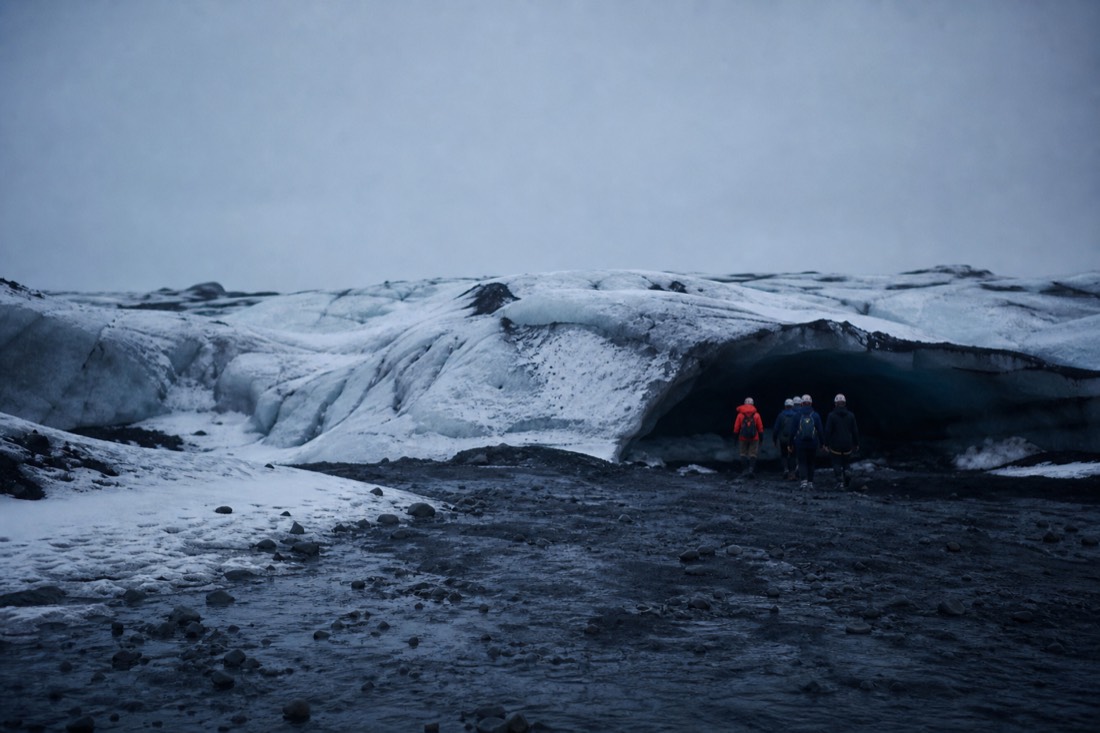
Group size tells you more than the price does. A cave chamber has a finite footprint, and thirty people in it means queueing for the one spot where the light comes through. Ask, or read the listing until it tells you. Small-group departures cost more for an obvious reason.
The second signal is who actually runs the departure. Names like Troll Expeditions, Arctic Adventures, Local Guide of Vatnajokull and Ice Explorers are operators in their own right rather than anonymous resellers. A listing that will not say whose jeep you are riding in has something to be vague about.
Weather cancellation is not a failure of your booking, it is the system working. Icelandic operators call off cave days when access tracks are unsafe, and they reschedule or refund. Register your plans and check conditions through safetravel.is, which is run by ICE-SAR and is the official channel rather than a blog's guess.
If you still have questions about how booking through this site works, who the operators are, and what we earn, that is all set out on our FAQ page in plain terms.
Jökulsárlón: Vatnajökull Ice Cave Guided Tour
Have your cave month in mind? Check your Jökulsárlón dates before you finalize the rest of the itinerary: the drive east decides the plan more than the cave does, and the listing cancels free up to 24 hours out.
2.5 to 3 hours · English
Check travel dates with GetYourGuide below.
None of these experiences matches that choice. Adjust your preference or reset to the general recommendation.
Compare Options And Plan Your Trip
- The flagship blue cave from Jökulsárlón
- Biggest glacier, bluest ice, needs two days or an overnight east.
- One day from Reykjavík
- The Katla super jeep from Vík, about three hours, ash-streaked ice.
- A private chamber, small group
- The private two-hour Vatnajökull cave tour on Viator.
- Outside the November to March season
- The man-made Langjökull tunnel runs all year; this snowmobile combo reaches it.
Before Booking