Why Nobody Wears Jeans in Iceland
On an aurora stop you stand still outdoors for an hour at about 0.5°C. Wet denim stops insulating entirely, and that is the whole argument, explained by a guide.
 By Björn Einarsson, Icelandic guide & winter tour specialist
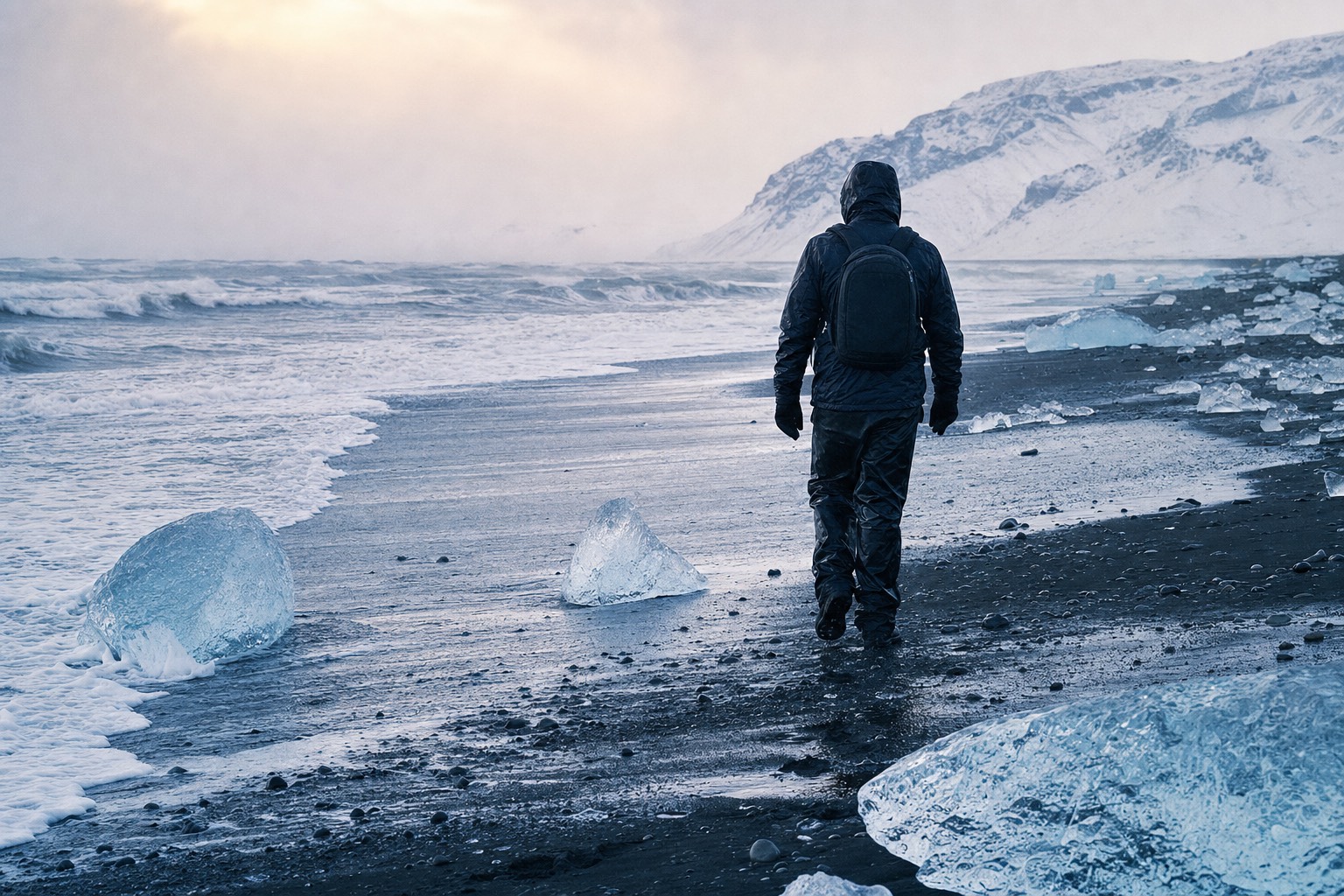
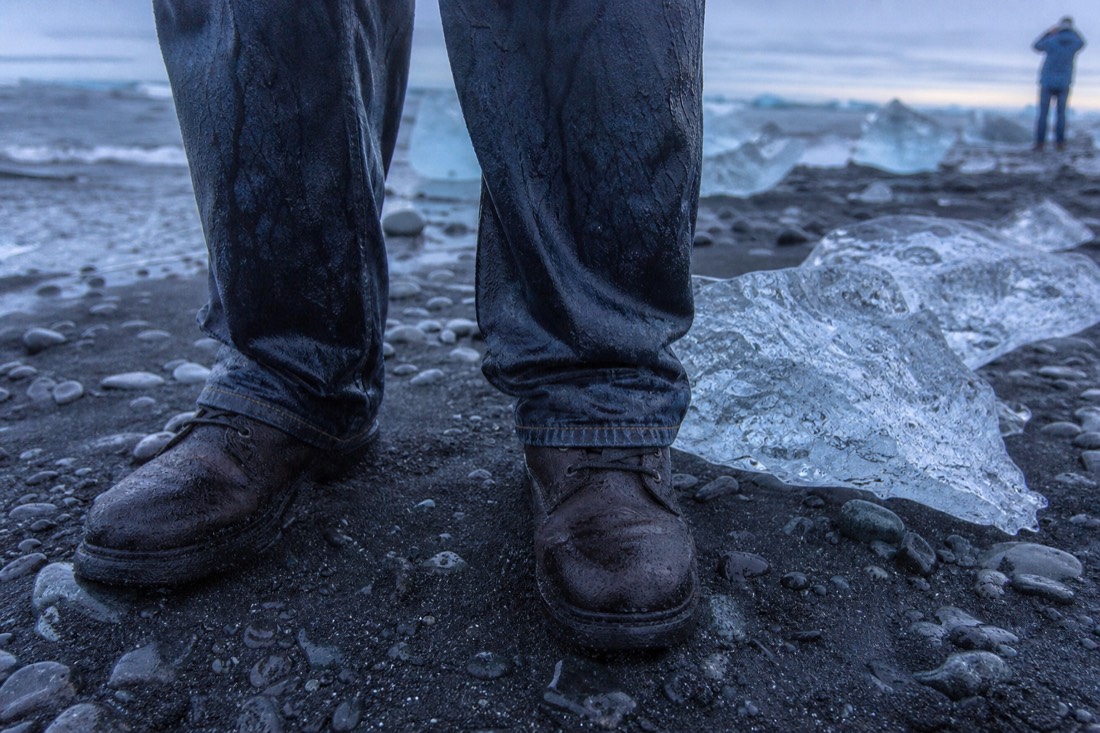
I once watched a man in dark blue jeans stand at Reynisfjara for eleven minutes before he gave up and went back to the coach. Not because of the cold air. Because a wave had reached him, the denim had gone black to the knee, and the wind then did the rest in about ninety seconds.
TL;DR: the rule is not really about jeans, it is about cotton. Denim absorbs water, holds it against your skin, loses whatever insulating value it had, and then dries painfully slowly in wind. In town that costs you nothing. On an aurora stop, where you stand still outdoors for an hour, it ends your evening. Icelanders wear jeans daily. They do not wear them to a glacier.
Why should you not wear jeans in Iceland in winter?
Because denim is cotton, cotton soaks up water and holds it, and wet fabric against skin pulls heat away far faster than dry fabric or still air ever could. The temperature is not the danger. Standing still in wet trousers in an Icelandic wind is where people actually get cold.
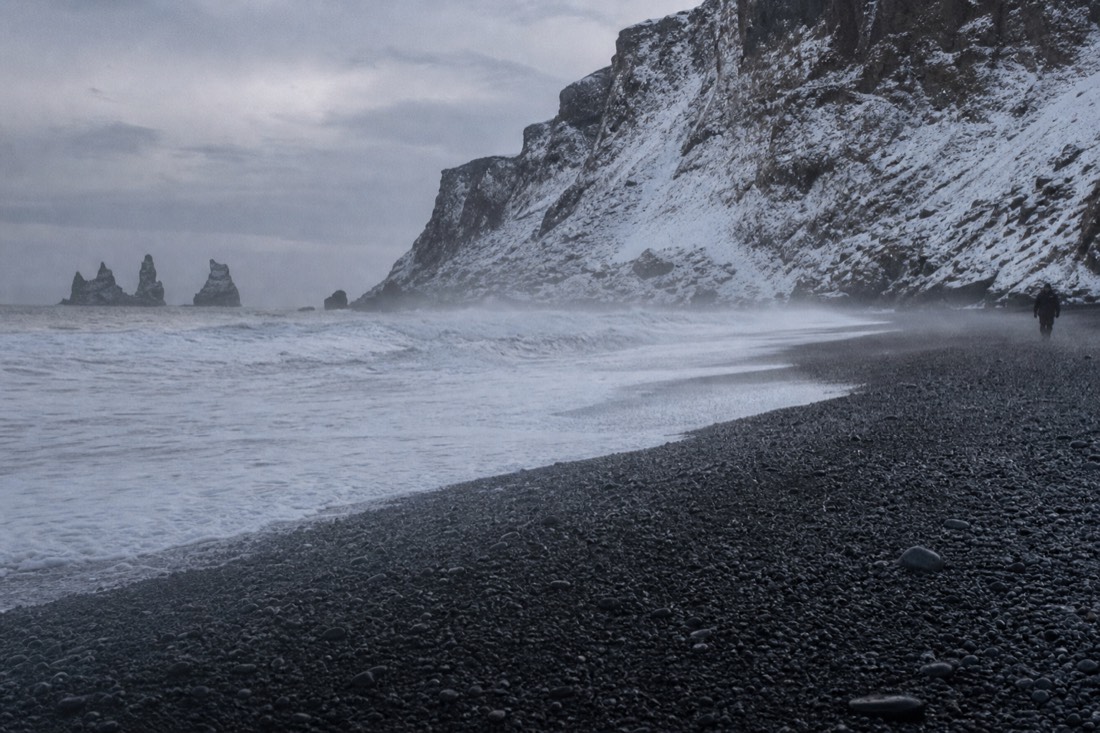
The number that misleads everyone is the thermometer. Reykjavík's January average is about 0.5°C, which sounds like a mild London winter and is why visitors keep arriving in a hoodie and jeans with a good coat over the top. The coat is usually fine. The legs are the problem, and legs are the part nobody thinks about.
Here is the sequence that plays out at every exposed stop on the South Coast. Spray, sleet or mist wets the denim. The fabric takes on water and stops trapping air. Wind moves across the wet surface and strips heat out of it continuously. You are not damp and slightly chilly, you are actively being cooled, and it does not stop until you change clothes.
Nobody is being precious about this. The official advice on safetravel.is, the ICE-SAR channel, says the same thing in plainer terms, and the rescue teams are the ones who see how it ends.
What actually happens to wet denim?
Dry fabric works by holding still air near your skin. Water displaces that air, and water carries heat away from a body far more efficiently than air does. Wet denim therefore stops being clothing and starts being a cooling system, and in wind it stays wet for hours.
| Material | When it gets wet | How fast it dries | Verdict for a tour day |
|---|---|---|---|
| Denim or cotton | Soaks, sags, stops insulating | Very slowly, especially in wind | No |
| Merino wool | Still insulates when damp | Slowly, but keeps working meanwhile | Yes, as a base layer |
| Fleece or synthetic mid layer | Sheds water, keeps loft | Quickly | Yes, as the middle |
| Waterproof shell trousers | Keeps water out entirely | Wipes dry | Yes, over everything |
| Waterproof-lined hiking boots | Keeps feet dry, holds crampons | N/A | Yes, and rent if needed |
Wool is the one to understand properly. It keeps a meaningful amount of its insulating value when damp, which is why every Icelandic wardrobe has a lopapeysa in it and why the tourist shops sell them at the prices they do. That is not a souvenir tradition, it is a functional garment that predates synthetics.
But Icelanders wear jeans constantly, don't they?
They do, and this is the honest part most packing lists skip. Jeans are normal daily clothing here, in offices, bars and school runs. The rule is not "never wear denim in Iceland", it is "never wear denim to stand still outdoors", and locals simply change before they go out into the weather.
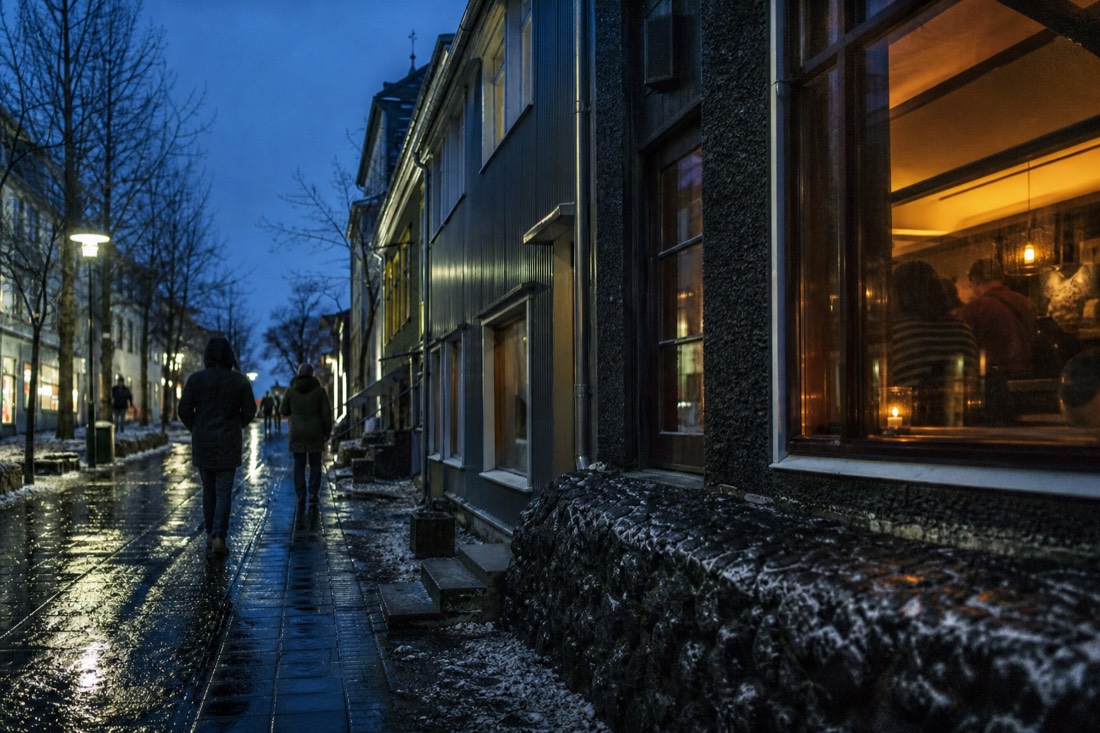
Watch what people carry rather than what they wear. Icelanders go from a heated house to a heated car to a heated building, and the outdoor exposure between them is measured in seconds. A visitor on a day tour has a completely different day: eight or ten stops, all of them outdoors, several of them windy, one of them an hour long in the dark.
So bring jeans if you want them. Wear them for dinner on Laugavegur, for the bar, for the museum, for the pool afternoon. Just do not get on the coach in them.
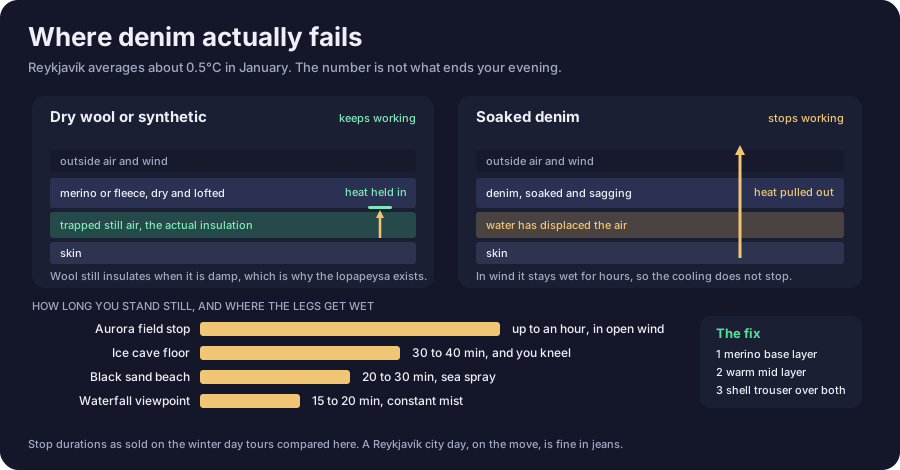
Where exactly does denim fail?
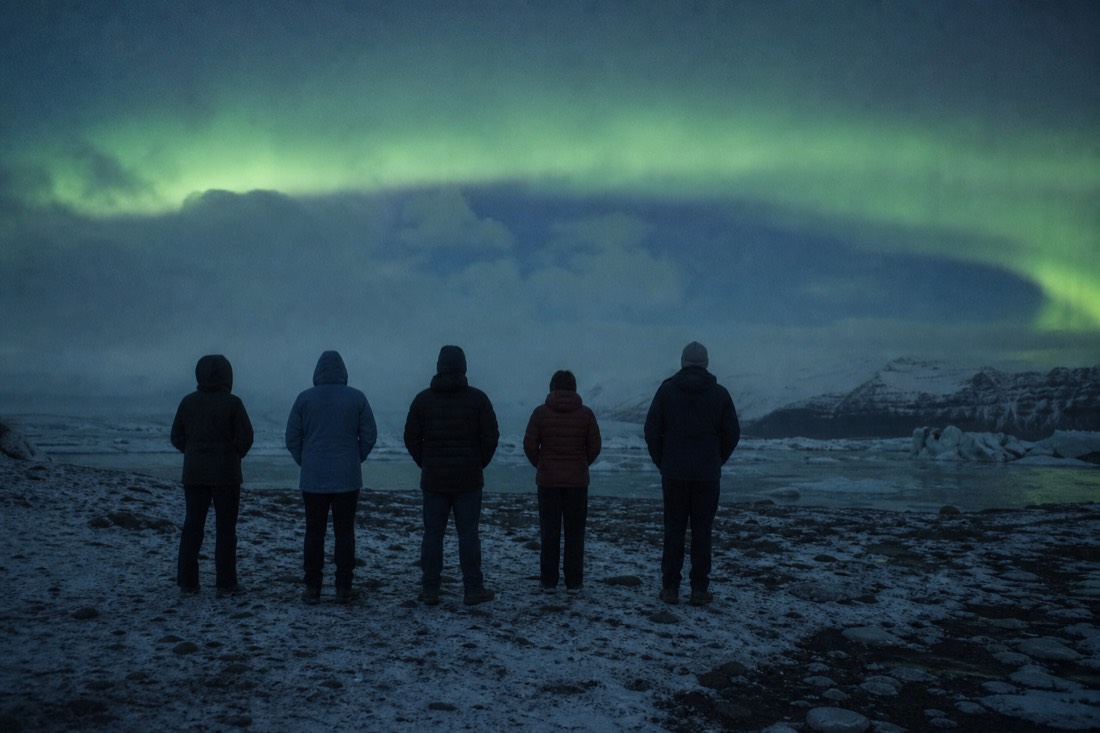
On every tour where you stop moving. Walking generates heat and forgives a lot, so a brisk city walk in jeans is survivable. An aurora stop, where you stand motionless in an open field for an hour in the dark, is where the wrong trousers turn a good night into an early exit.
| The stop | How long you stand still | What hits your legs | Denim verdict |
|---|---|---|---|
| Aurora field stop | Up to an hour, sometimes twice | Wind, frost, occasional sleet | The worst case, no |
| Black sand beach | 20 to 30 minutes | Sea spray carried on the wind | No |
| Waterfall viewpoint | 15 to 20 minutes | Constant fine mist, even in frost | No |
| Ice cave floor | 30 to 40 minutes | Wet gritty ice, and you will kneel | No |
| Glacier walk | 1 to 2 hours moving | Snow, wind, occasional rain | No, and boots matter more |
| Reykjavík city day | Minutes at a time | Rain, mostly | Fine |
That aurora line is the one to take seriously, because the whole point of the night is to remain outside long enough for the sky to do something. The four hours of a typical aurora run are broken down in what a northern lights tour is actually like, and Visit Iceland's own aurora page is equally blunt about needing patience outdoors.
What do you wear instead?
Three layers on the legs, same principle as the top half: a merino or synthetic base layer, a warm mid layer if it is properly cold, and a waterproof windproof shell trouser over the lot. The shell is the item people leave at home and the one that actually does the work.
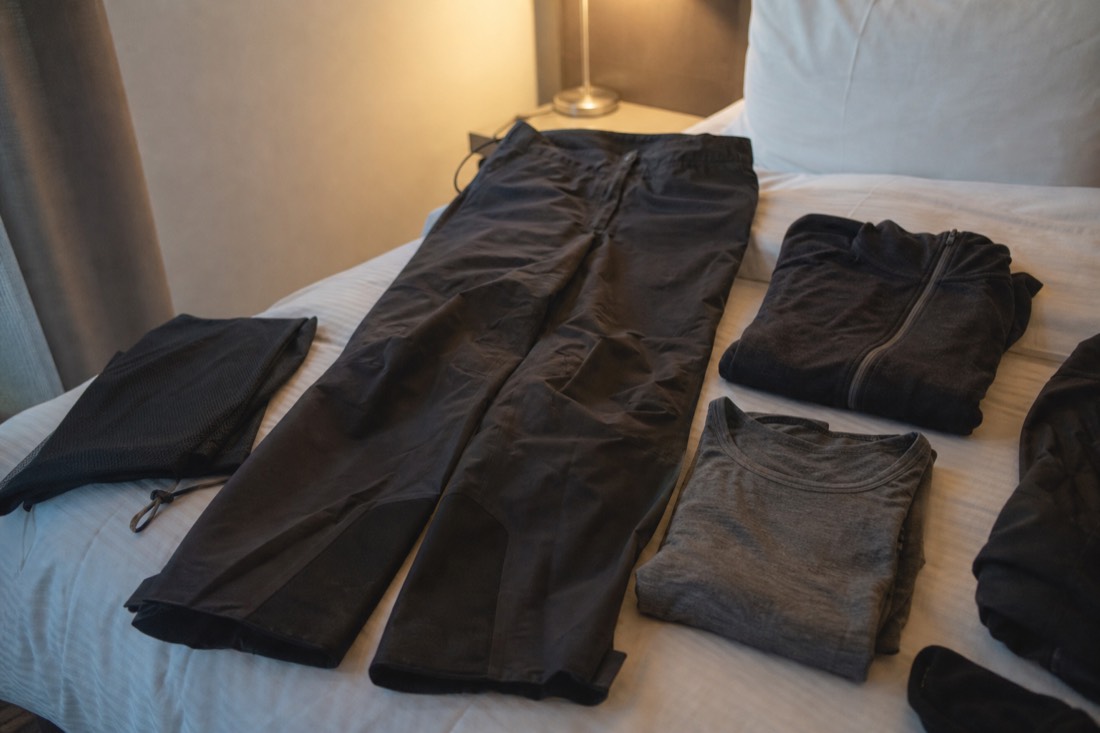
Most visitors get the jacket right and the trousers wrong. A shell trouser packs down to nothing, costs less than a jacket, and turns every exposed stop from an endurance test into a pleasant twenty minutes. If you buy one thing before flying, buy that.
The full list, including the items that are worth renting rather than buying, sits in what to pack for Iceland in winter, which goes item by item in a way this post deliberately does not.
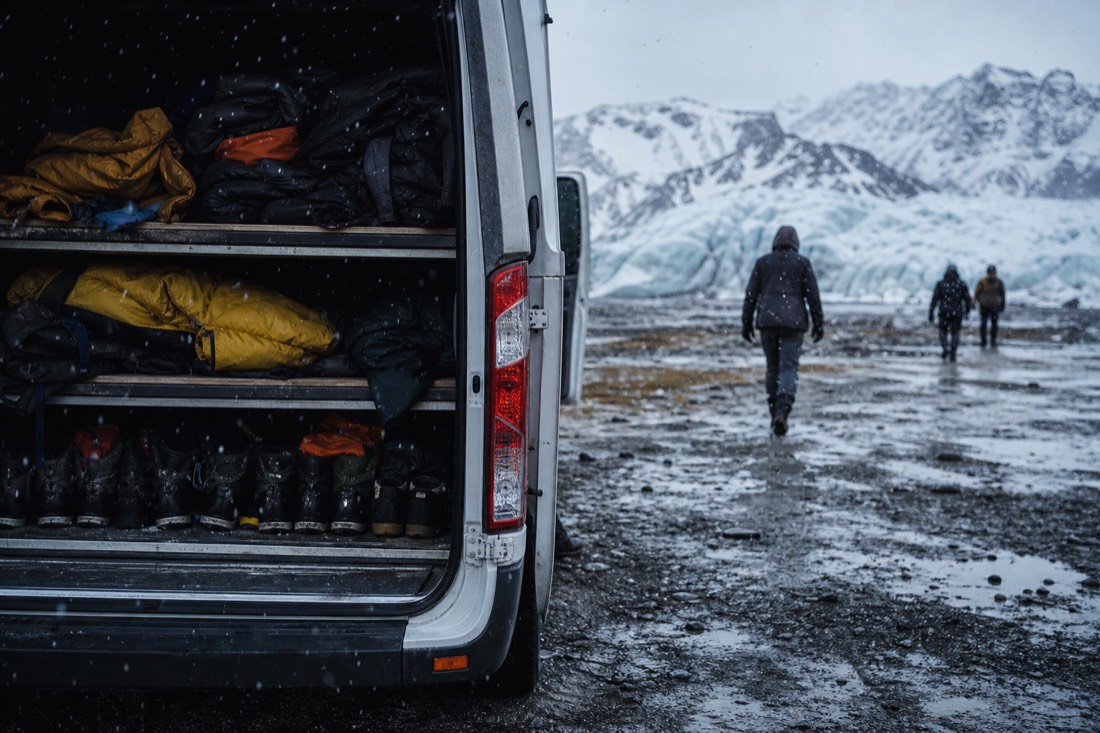
Footwear deserves one line here, since it decides which tours you can join. Trainers will not hold crampons, so any glacier or ice cave day needs a stiff waterproof boot. Operators supply the crampons and the helmet, not the boots.
What if you have already packed nothing but jeans?
You have four workable options, and three of them are cheap. Buy a shell trouser in Reykjavík, rent proper gear from the operator where it is offered, layer thermals under the jeans as a stopgap, or move the exposed tours later in the trip and do the city first.
| If you only have jeans | Effort | Honest verdict |
|---|---|---|
| Buy waterproof shell trousers in town | An hour on Laugavegur | Best fix, and you keep them |
| Rent boots and outer layers from the operator | Booked with the tour | Good for glacier and cave days |
| Wear thermals under the jeans | Free, if you packed them | Helps in dry cold, useless once wet |
| Reorder the trip, city days first | Free | Buys you a day to fix the problem |
The rental route deserves more credit than it gets. On glacier days the operator already provides the technical kit, so you are only filling the gaps: the glacier hiking tours page lists what each departure includes, and the Sólheimajökull blue ice walk at 4.7 across 1,417 GetYourGuide reviews is available to check for your dates on GetYourGuide.
What is actually in an Icelandic winter wardrobe?
Wool, one good shell, and footwear you can trust on ice. The lopapeysa is a working garment rather than a souvenir, wool socks outnumber cotton ones by a wide margin, everybody owns a hooded waterproof they have had for years, and a set of slip-on ice grips lives in a coat pocket from November onwards.
The thing that surprises visitors is how unglamorous it is. Nobody here dresses like a catalogue for the outdoors. What you see instead is one shell jacket worn until it fails, a jumper that has been washed a hundred times, and boots chosen for grip rather than for looks. The wardrobe is small and it is repetitive, because the weather asks the same question every day and there is only one right answer.
Ice grips are the item almost no visitor packs and almost every local owns. They cost very little, they fold into a pocket, and they turn a Reykjavík pavement in February from a hazard into a pavement. The thaw and refreeze cycle is what does it: snow melts in the afternoon, water runs across the path, and by eight the next morning that path is a rink. Car parks at the famous stops behave exactly the same way, which is why the guides you meet are all wearing something on their soles.
The other permanent fixture is a swimsuit. It lives in the bag all year, because the pool is not a summer activity here, it is the evening. That habit is worth copying for a four-night trip.
| What is in the cupboard | What it is really for | The visitor equivalent |
|---|---|---|
| A lopapeysa or another wool jumper | Keeps insulating when it is damp, which cotton cannot do | Any merino or wool mid layer you already own |
| Wool socks, several pairs | Feet get wet first and dry last | Two pairs for every tour day, one spare in the bag |
| A hooded waterproof shell | Wind and horizontal rain, not deep cold | The single item most worth buying before you fly |
| Ice grips that pull over your shoes | Pavements and car parks that thaw and refreeze | Cheap, packable, and they change how you walk |
| A hat that covers the ears | Wind, again, always wind | Anything that will not blow off your head |
| A swimsuit and a towel, permanently | The pool is the plan most evenings | Pack them even for a short trip |
| Jeans | Everything that happens indoors | Bring them, and wear them in town |
If you want the version of this written as a packing list rather than a wardrobe, what to pack for Iceland in winter goes item by item. The gear that comes with the tour instead of out of your suitcase is listed per departure on the glacier hiking tours page.
Do you need smart clothes for restaurants in Reykjavík?
No, and this myth costs people suitcase space every winter. Reykjavík has almost no dress codes. A good restaurant on a January evening holds people in wool jumpers, people in shell jackets and one person in a shirt, often at the same table. A meal runs roughly 3,000 to 5,000 ISK and nobody is inspecting your trousers.
I think the myth comes from the prices. Dinner in Iceland is expensive, people assume expensive means formal, and they pack an outfit they will wear once. In practice the room you walk into at seven has just been emptied out of a fleet of tour coaches, and half of it is still slightly damp.
There is one social rule and it is about the coat, not the clothes. Wet outer layers come off at the door and go on a hook or over the back of a chair, because dripping onto the floor of a small warm room is the actual faux pas here. Boots do the same thing at somebody's house, where you take them off without being asked.
So the jeans you brought have a purpose. They are indoor clothing. Wear them for the meal, the bar, the museum, the swimming pool afternoon and the walk between all four, and keep the shell trousers for the days when you leave the pavement.
| Where you are going | What people actually wear | What to skip |
|---|---|---|
| A casual restaurant or a fish place | Whatever they toured in, minus the wet shell | Worrying about it at all |
| A smarter dinner in the centre | Jeans and a jumper, a shirt if you want one | Packing a jacket and tie for one night |
| A bar on Laugavegur | Jeans, trainers, coat over the chair back | Leaving your coat in the coach and freezing on the walk home |
| Hotel breakfast before an 07:30 pickup | Already fully dressed for the tour | Changing twice in the dark |
| A concert or an evening at Harpa | Smart casual at the very most | Buying an outfit for it |
| The swimming pool | A swimsuit, and nothing else you brought | Assuming you can wear shorts instead |
The upshot is that your packing decisions are all about the outdoor half of the day. Everything indoors is solved. What the outdoor half asks for is set out honestly in Iceland in winter, what to expect.
How do you dry everything overnight in a hotel room?
Badly, unless you plan for it. Icelandic rooms are warm and dry, but soaked leather boots will not be wearable by 07:30 and a wet cotton hoodie will still be damp at lunchtime the next day. Wool and synthetics dry overnight. That difference, again, is the entire argument of this article.
This is the part of a winter trip nobody writes about and everybody eventually deals with. You come back at six from a day of sleet with four wet items, you have another pickup at half seven the following morning, and the room has one radiator and a hairdryer bolted to the wall.
The order matters. Shell trousers and a shell jacket get wiped down and hung up, and they are ready in an hour, because the water was never in the fabric. Wool socks go on the radiator and are fine by morning. Boots are the problem child: stuff them with paper, keep them away from direct heat so the leather does not crack, and accept that a genuinely soaked pair may need a second night. Down jackets are the other slow one, since wet down clumps and stops lofting.
A cotton hoodie or a pair of jeans that got properly wet is the item that simply does not recover in time. That is not a laundry failure, it is the same property that makes them wrong outdoors, showing up in a warm room instead of a cold field.
| The wet item | What it needs | What actually works |
|---|---|---|
| Waterproof shell trousers and jacket | Wiping and air, not heat | Shake them out, hang them, ready within the hour |
| Wool socks and base layers | A warm surface overnight | Radiator or towel rail, dry by breakfast |
| Leather or fabric boots | Time, plus something to absorb the inside | Paper stuffed in, away from direct heat, two nights if bad |
| Gloves | Turning inside out first | Radiator, splayed open, and carry a second pair regardless |
| A down jacket | Longer than one night | Hang it loose, and stop wearing it as an outer layer in rain |
| Jeans or a cotton hoodie | More time than you have | Nothing. This is why you do not wear them outdoors |
Radiators here are geothermally heated, so drying things is at least cheap. The other reason it matters is a booking one: if the ice cave day is tomorrow and your only boots are wet through, you have a problem the operator cannot solve, and the Vatnajökull ice cave tours all start with a walk over uneven ice in whatever you turned up in.
What do you wear to a lagoon or a swimming pool?
A swimsuit, and essentially nothing else. The walk from the changing room to the water is the cold part and it lasts under a minute. What actually catches visitors out is the compulsory naked soap shower before entry, wet hair in a freezing evening, and then carrying a soaked towel around for the rest of the day.
The shower rule is not a suggestion and it is not negotiable. You wash, without a swimsuit, with soap, in a shared changing room, and there is usually somebody whose job includes noticing whether you did. The reason is straightforward: Icelandic pools run on much less chemical treatment than pools elsewhere, and that only works if everybody arrives clean. Visitors who bristle at this are the only people who ever have a bad time at an Icelandic pool.
Everything after that is easy. The water is hot, the air is cold, snow lands on your head and melts, and the whole thing is better in bad weather than good. It is also the one activity on an Icelandic winter trip that never gets cancelled, which makes it the best plan B in the country and the reason it appears in every guide's list of what to do when the roads shut.
Two practical warnings. Wet hair in an Icelandic wind is genuinely unpleasant, so bring a hat for afterwards rather than discovering the problem at the bus stop. And a wet towel is a heavy, cold thing to carry for six hours, so it wants its own bag rather than a place next to your dry layers.
| What to take to a lagoon or pool | Why | The common mistake |
|---|---|---|
| A swimsuit | The only thing you strictly need | Assuming you can rent one on the day without checking |
| A hat for afterwards | Wet hair plus a winter evening is miserable | Walking out to a bus stop with soaked hair |
| Flip flops or slides | Wet tiled floors, and cold outdoor walkways | Bare feet on the walk between rooms |
| A separate bag for the wet towel | It has to travel with you all afternoon | Packing it against your dry clothes |
| A hair tie, if your hair is long | Mineral-rich water and long hair take a while to settle | Nothing, then regretting it |
| Patience for the shower rule | It is compulsory, supervised and the reason the water is good | Trying to keep your swimsuit on |
If a tour gets cancelled and the day suddenly has a hole in it, this is where I send people first, ahead of any museum. The full plan B list is in Reykjavík when your tour gets called off, and the two big options with transfers included are compared on the Blue Lagoon and Sky Lagoon page.
Does the tour type change the answer?
Yes, in one direction only. Some tours hand you the outer layer, which removes the problem entirely. Snowmobiling and drysuit snorkelling both put you into supplied gear, so what you wear underneath matters more than what you wear on top.
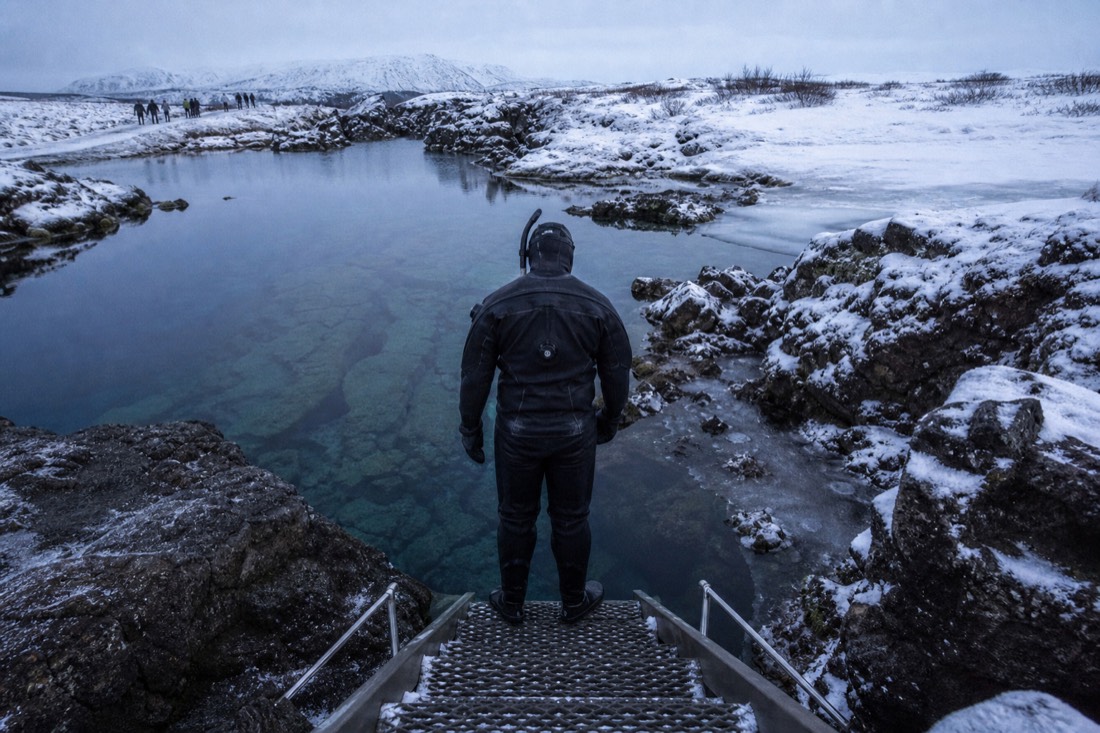
The drysuit tours at Silfra are the clearest case: the suit is the product, and you are sealed inside it with your own base layers doing the insulating. Wool under a drysuit is comfortable, cotton under a drysuit is a long cold hour, which is why the Silfra snorkelling tours briefings tell you what to wear before you arrive. That category rates 4.9 across 10,897 reviews, the highest on this whole site.
The snowmobile tours work the same way, with an overall pulled over your own clothes at the glacier base. Everything else, and that means the aurora runs, the South Coast days and the ice caves, leaves your legs entirely to you.
Get that one item right and the rest of the trip changes character. Warm dry legs are the difference between spending an hour in a dark field waiting for the sky to move and giving up after eleven minutes, like the man at Reynisfjara. The other things I wish visitors knew before they landed are collected in what I wish I knew before my first Iceland winter, and the kit questions we get asked most are answered on the FAQ page.
From Reykjavík: Northern Lights Bus Tour with Hot Cocoa
Warm dry legs are the difference between an hour in a dark field and giving up after eleven minutes. Check the aurora night's dates early in your week: the retry clause only pays while you still have nights, and the listing cancels free up to 24 hours out.
4 hours · English
Check travel dates with GetYourGuide below.
None of these experiences matches that choice. Adjust your preference or reset to the general recommendation.
Compare Options And Plan Your Trip
- The hour standing still
- The aurora field stop, the worst case in the denim table.
- A gear-supplied day
- Snowmobile overall and cave visit, kit handed to you.
- The suit-is-the-product day
- Sealed in a drysuit; only your base layer matters.
- The boots-decide day
- A short walk onto the ice where footwear is the gate.
- The never-cancelled plan B
- The lagoon evening that no weather takes away.
Before Booking