Iceland in Winter: What to Expect and What to Do
December gives Reykjavík about four hours of daylight. Here is what an Icelandic winter actually allows, the ten tours that run, and how to order them.
 Written with Björn Einarsson, Icelandic guide & winter tour specialist
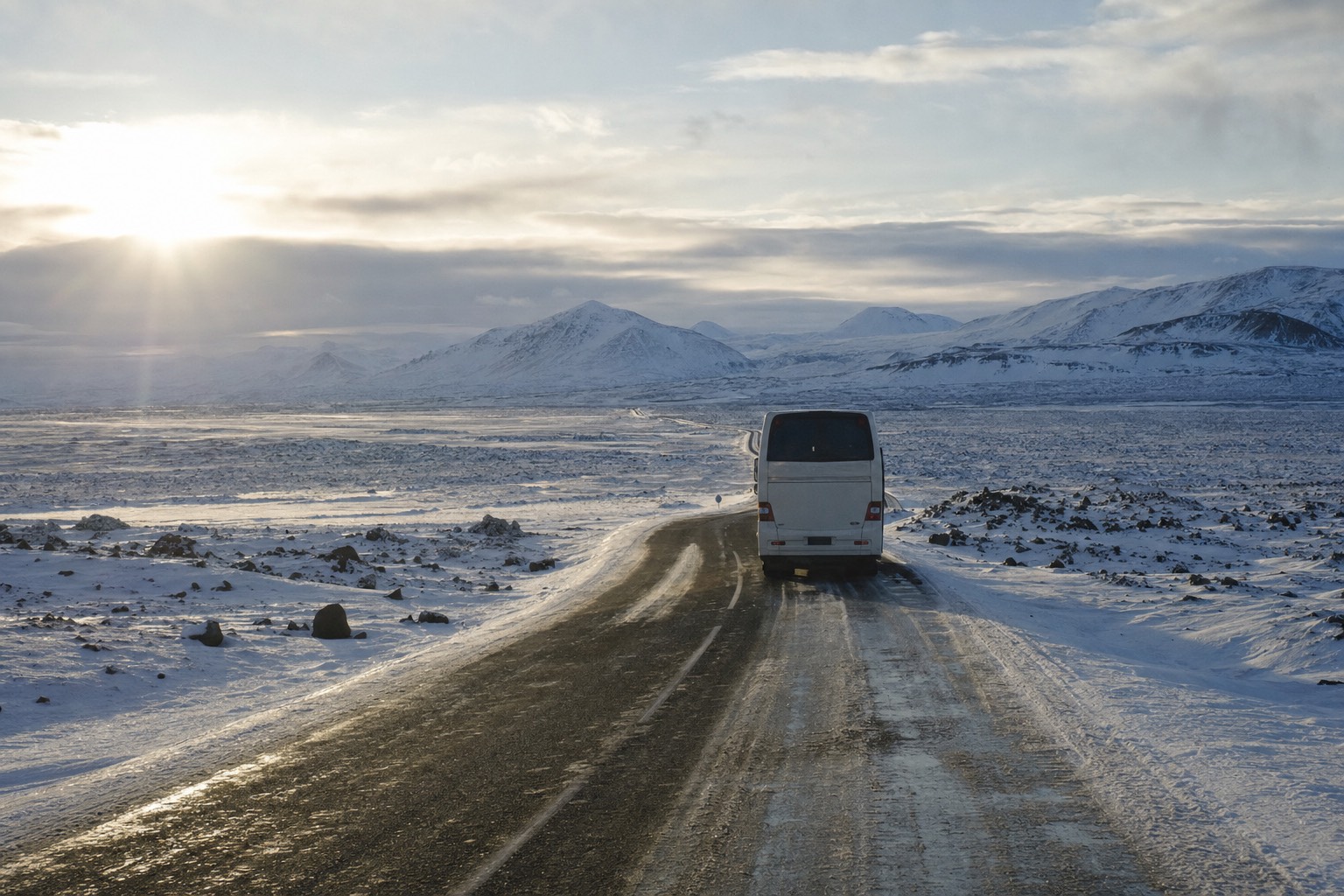
Half past eight on a January morning, and the bus out of Reykjavík loads in complete darkness. Nobody on board looks cheated. They have read the daylight figures, and they came anyway, because the things they want only exist when the country is frozen: a cave underneath a glacier, a sky doing something unrepeatable, a black beach with nobody standing on it.
TL;DR: Winter gives you natural ice caves, aurora nights and the quietest version of Iceland's big sights, at the cheapest time of year. It takes away daylight, the highland roads, and a certain number of your plans. Ten kinds of tour run through the dark months. Book the weather-dependent ones early in your trip and keep the reliable ones back as insurance for the end.
Is it worth visiting Iceland in the winter?
Yes, if you want the things only winter makes: natural ice caves, the aurora, and a South Coast without a queue at it. No, if you need long days and open highland roads. December gives Reykjavík roughly four hours of daylight, and weather cancels tours. Come for the winter itself, not despite it.
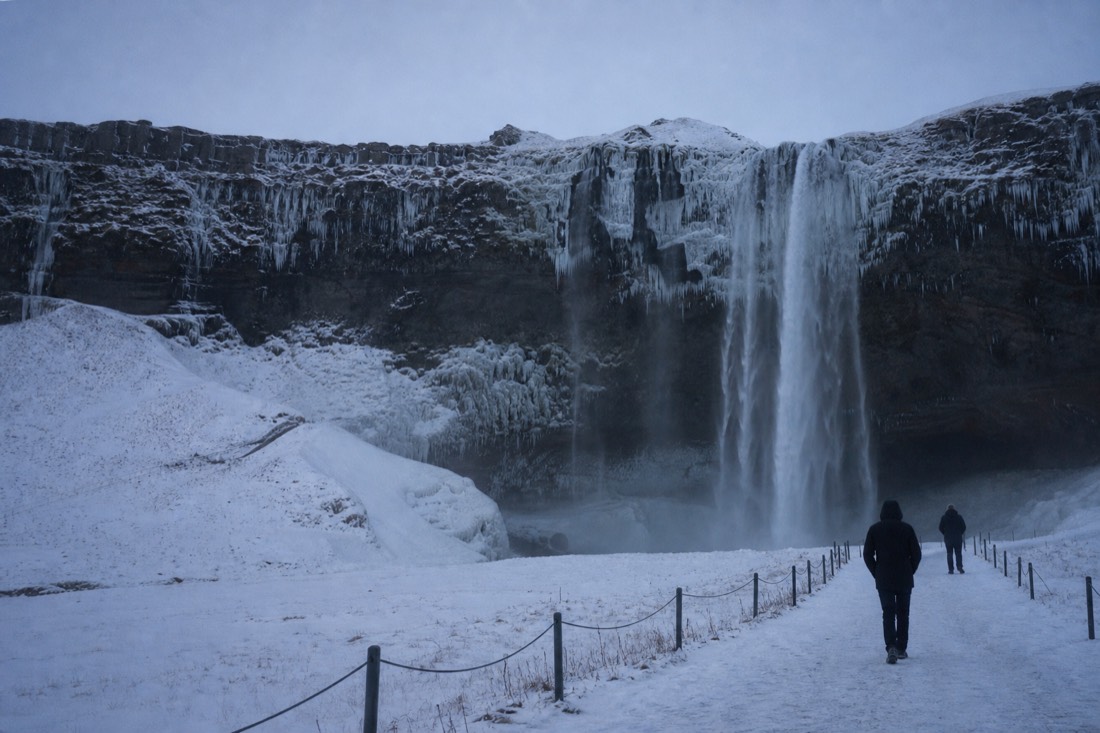
The honest version is that winter Iceland is a trade, and most people come out ahead on it. The caves under Vatnajökull and Mýrdalsjökull are carved by summer meltwater and refreeze every cold season, so they only exist between roughly November and March. The aurora needs darkness, and darkness is exactly what you are buying. Meanwhile the sites that feel overrun in July are yours: I have stood at Seljalandsfoss in February with four other people and a wind that took the conversation away.
What you give up is real too. Four hours of usable light in late December is not a rumour, it is the reason a full South Coast day starts and ends in the dark. The interior is shut. Some mornings, the road out of town is shut as well.
The trip works if you build it around that instead of around a summer itinerary with a coat on. Fewer sites per day, more time in the vehicle, and a driver whose job is deciding whether today is a Vík day or a Reykjanes day. If you are still weighing which month to take, the month-by-month verdict is a separate piece of work, and it does not give the same answer to everyone.
What can you do in winter that you cannot do in summer?
Three things: enter a natural ice cave, which only exists roughly November to March; hunt the aurora, whose season runs late August to late April and peaks October to February; and see the famous sites without crowds, at low-season prices. None of the three is available to a July visitor at any price.
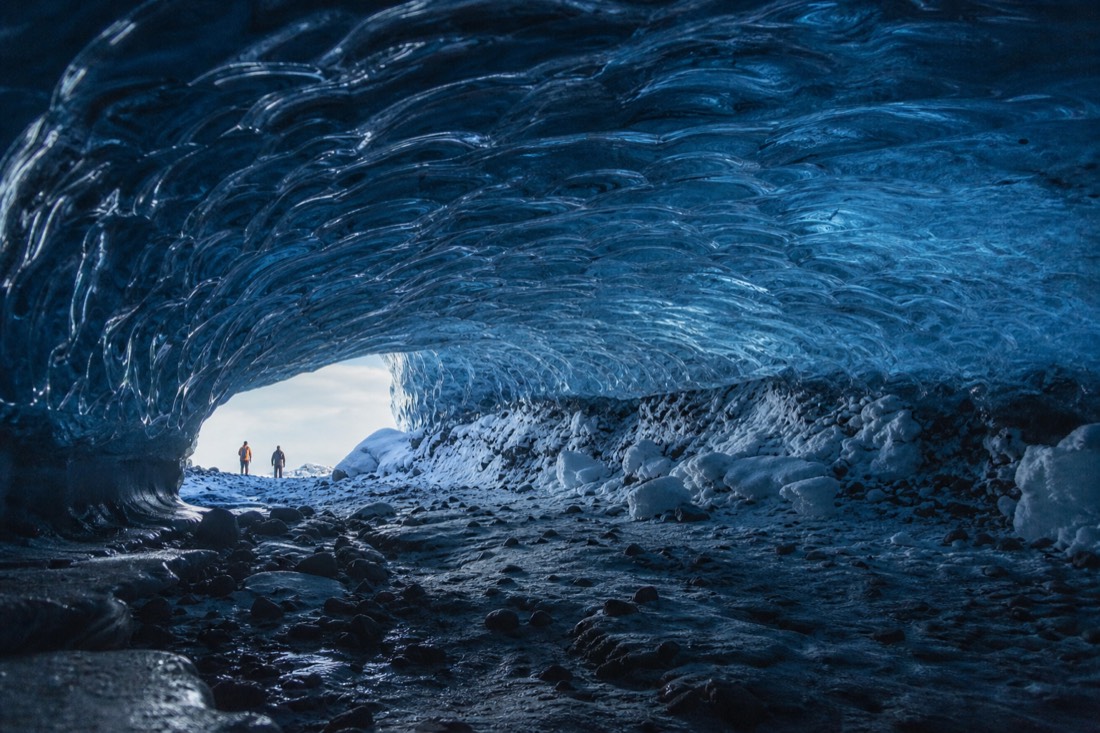
The ice caves are the strongest argument. They are not permanent features. Meltwater cuts them through the glacier in summer, the cold locks them up again, and which caves exist changes from one year to the next, which is why the operators re-scout them every autumn. Guide to Iceland's background on the cave season explains the formation better than most operator pages do. Around 30 companies hold permits to run these tours, so the products on the Vatnajökull and Katla ice cave pages are a shortlist of a much longer list.
The aurora is the second. It needs solar activity and a gap in the cloud on the same night, which is why nobody honest guarantees it. What winter guarantees is the darkness, and a long enough night that a four-hour northern lights tour has time to drive out from under the weather.
The third is quieter and undersold. Low season means the Golden Circle car parks have space, the guides are less rushed, and the guesthouse in Vík has a room. Waterfalls freeze into shapes they never hold in summer. Skógafoss with an ice shelf at its base is a different photograph from the postcard one.
What tours actually run in Iceland in winter?
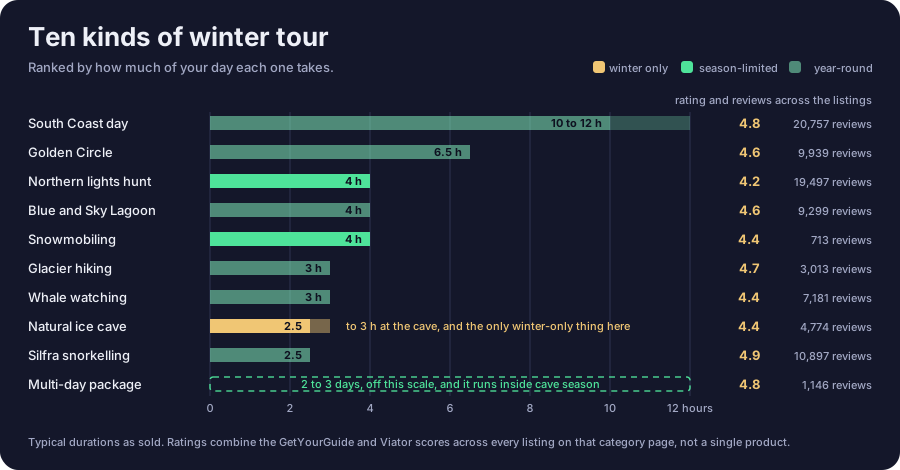
Ten kinds run through the dark months. Northern lights, natural ice caves, South Coast, Golden Circle, glacier hiking, the geothermal lagoons, whale watching, snowmobiling, Silfra snorkelling and multi-day packages. Only the ice caves are winter-only. Everything else runs year-round but changes character once the ground freezes.
| Tour type | Typical length | Winter status | Rating across the listings we track | Who it suits |
|---|---|---|---|---|
| Northern lights hunt | about 4 h, evening | Season late Aug to late Apr, strongest Oct to Feb | 4.2 / 19,497 reviews | anyone with three or more nights |
| Natural ice cave | 2.5 to 3 h at the cave | Roughly Nov to Mar only | 4.4 / 4,774 reviews | the one thing summer cannot sell you |
| South Coast day | 10 to 12 h | Year-round, biggest winter day out | 4.8 / 20,757 reviews | waterfalls, black sand, glacier tongues |
| Golden Circle | about 6.5 h | Year-round | 4.6 / 9,939 reviews | short trips and first days |
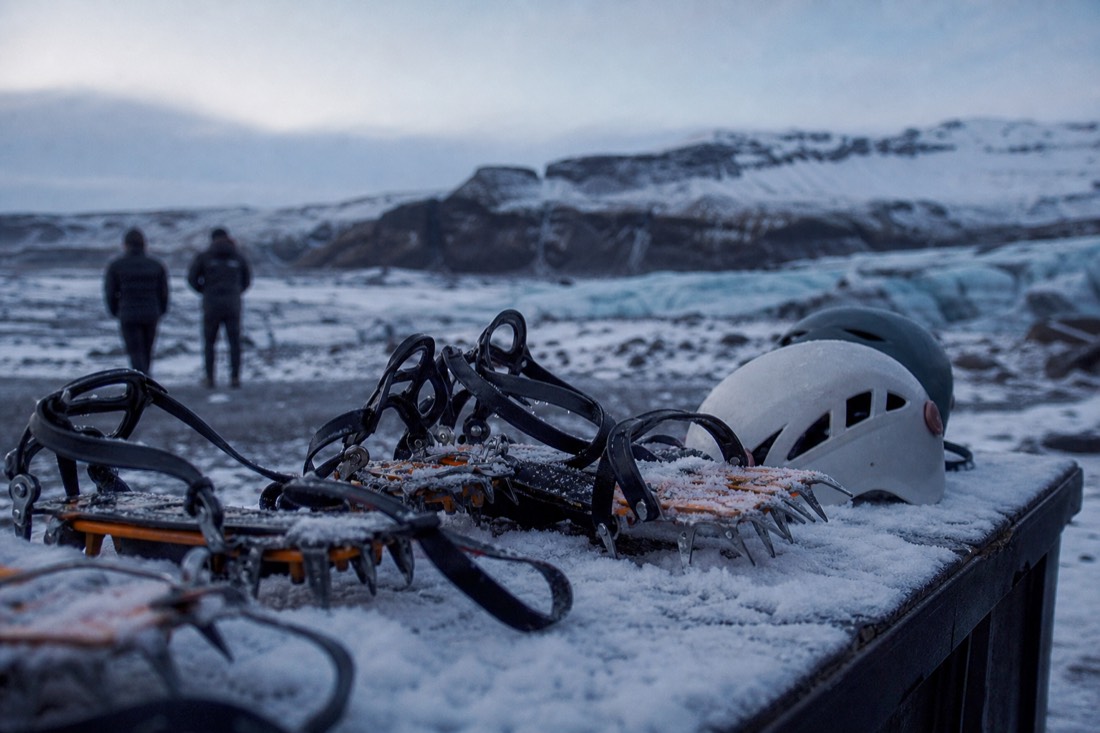
| Glacier hiking | about 3 h on the ice | Year-round, crampons fitted for you | 4.7 / 3,013 reviews | moderate fitness, no experience needed |
| Blue Lagoon and Sky Lagoon | about 4 h with transfers | Year-round, timed entry | 4.6 / 9,299 reviews | arrival or departure day |
| Whale watching | about 3 h | Year-round from the Old Harbour | 4.4 / 7,181 reviews | families, calmer sea days |
| Snowmobiling on Langjökull | about 4 h | Winter and spring on the glacier | 4.4 / 713 reviews | pairs with the Golden Circle |
| Silfra snorkelling | about 2.5 h | Year-round in a drysuit | 4.9 / 10,897 reviews | the best-scoring thing on this list |
| Multi-day package | 2 to 3 days | Winter, inside cave season | 4.8 / 1,146 reviews | Jökulsárlón without driving it twice |
Ratings are the combined GetYourGuide and Viator scores across every listing on that category page, not a single product. Individual tours sit above and below their category average, which is the whole reason the category pages exist.
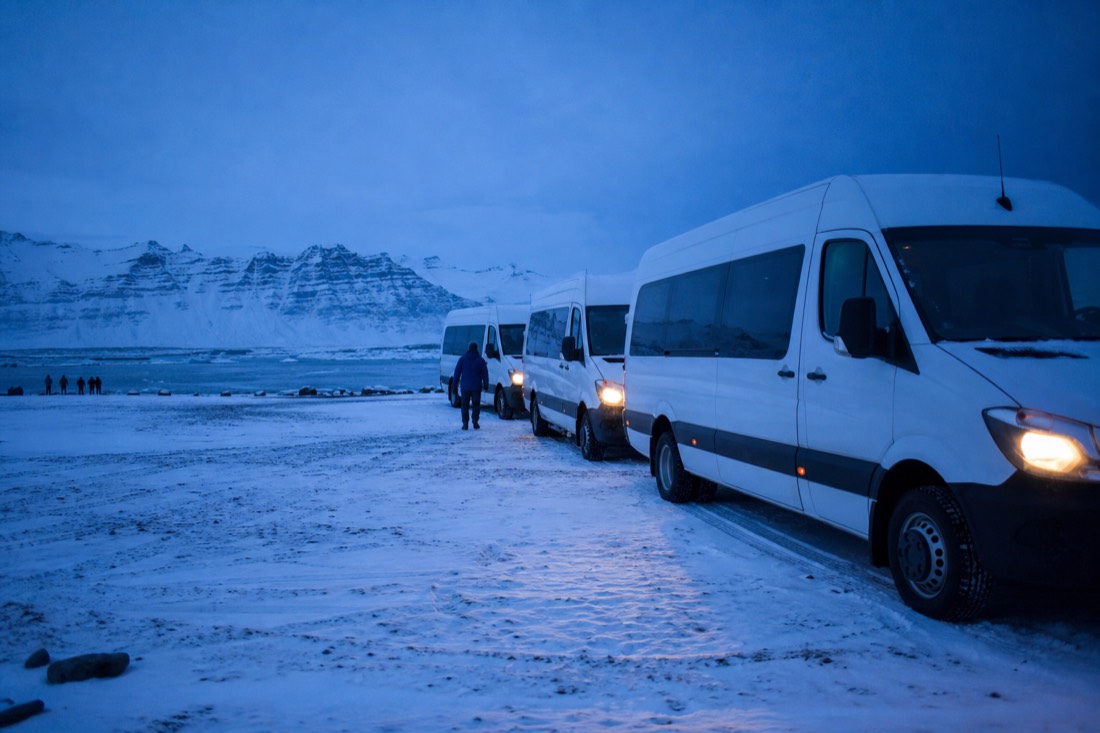
One line in that table decides most trips. Jökulsárlón is about 380 km from Reykjavík, roughly five hours each way, and in January you would drive both legs in the dark. That is the single trip where a two or three-day winter package is the sane call rather than the extravagant one.
How short are the days, and how does that change a trip?
Reykjavík gets about 6.5 hours of daylight in November, about 4 at the December solstice, about 5.5 in January, about 8.5 in February and about 11.5 in March. That is the single number that reshapes an itinerary: in December you plan one thing per day, in February you can plan two.
| Month | Daylight in Reykjavík | What one day realistically allows |
|---|---|---|
| November | about 6.5 h | A full South Coast day, with the last stop in dusk |
| December | about 4 h at the solstice | One region done properly, and dark driving at both ends |
| January | about 5.5 h | South Coast works again; Jökulsárlón in a day is punishing |
| February | about 8.5 h | Two-site days, plus an aurora night in the same 24 hours |
| March | about 11.5 h | Near-normal light, caves closing, aurora season fading |
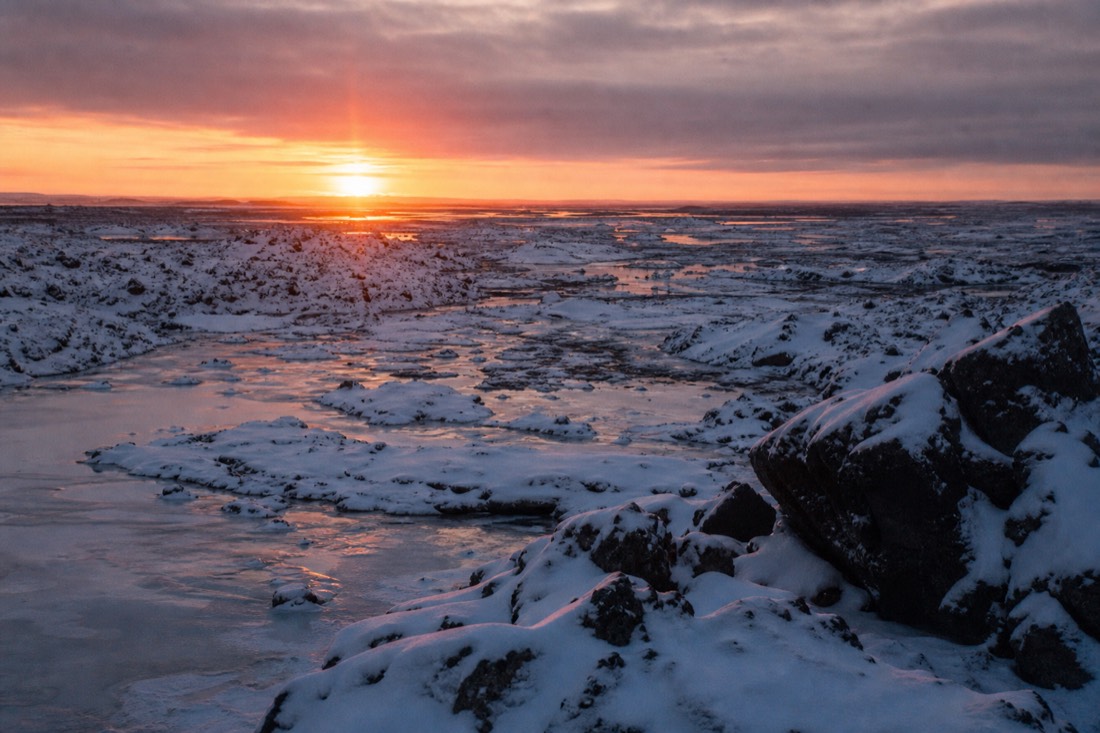
Daylight is not the same as good light. The sun stays low, so what you actually get in December and January is a four-hour sunrise that turns into a sunset, which is unflattering for schedules and extremely flattering for photographs. Guides plan around it: the site you most want in decent light goes in the middle of the day, and the drive goes on either side.
February being roughly twice as bright as December is why it wins for most first-timers, and why the same itinerary feels generous in one month and cramped in the other.
What gets cancelled in an Icelandic winter, and what happens then?
Wind and ice cancel tours, not cold. Operators reschedule or refund their own weather cancellations, and every listing on this site allows free cancellation up to 24 hours before departure, except the Blue Lagoon admission with transfers, which needs 2 days. The highland F-roads are shut all winter regardless.
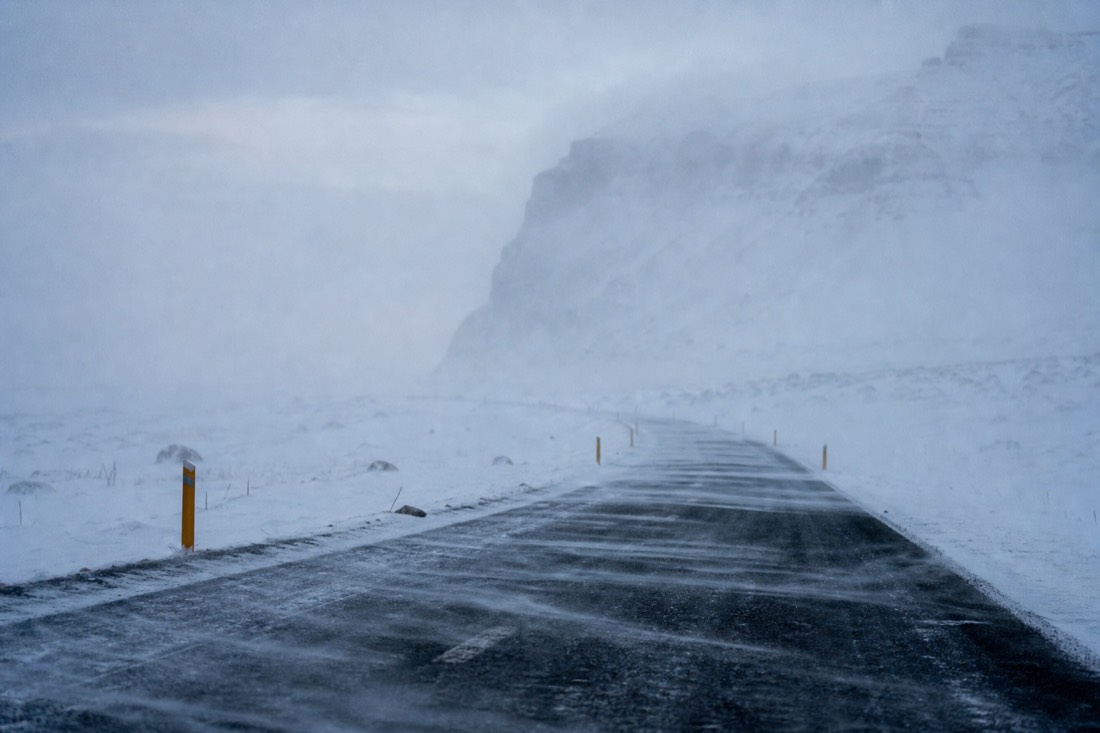
The thing that catches people out is that a cancellation is usually the correct decision, made by somebody who has driven the road at four in the morning. Icelandic wind does not need a storm to close a route: it lifts loose snow across a road until nobody can see the verge. Check road.is on the morning of any drive, and take the closure colours at face value.
If you are driving yourself, safetravel.is is where ICE-SAR publishes conditions and where you can leave a travel plan; the 112 Iceland app does the same from your phone. Studded tyres are legal from 1 November to 15 April, and any winter rental should have them. Whether you should be driving at all in January is a genuine question with a genuine answer, and the self-drive versus guided comparison works through it properly.
When a day does collapse, the trip is not over. Reykjavík has an indoor afternoon in it, the lagoons run in weather that stops the mountain roads, and a rescheduled ice cave the following day is often better than the one you lost. There is a whole post on this site about the day the weather cancelled everything, written from inside one. Cancellation terms, pickup rules and the rest of the small print sit on the FAQ page.
What should you book first, and what can wait?
Book the season-limited and small-capacity things before you fly: ice caves, Silfra, glacier hikes and your first aurora night. Leave the high-capacity year-round tours until you see the forecast. Free cancellation up to 24 hours out means an early booking costs you nothing but keeps the date.
| Tour | Book before you fly? | Why |
|---|---|---|
| Natural ice cave | Yes | Roughly Nov to Mar only, and about 30 permitted operators share the season |
| Northern lights, first night | Yes | A free retry night is only worth something if nights remain |
| South Coast day | Yes | 10 to 12 hours, so the rest of the trip has to bend around it |
| Silfra snorkelling | Yes | Drysuit fitting and a fixed 2.5 hour slot |
| Glacier hike | Yes for a specific morning | Fitted crampons and set departure times |
| Golden Circle | A day or two ahead is fine | 6.5 hours, runs through the winter, easy to move |
| Blue Lagoon with transfers | Yes, timed entry | The one listing here with a 2-day cancellation window |
| Whale watching | Flexible | Year-round from Reykjavík, and the sea makes the call |
That table is the whole sequencing argument in one grid. The pattern I give visitors is simple: put the irreplaceable things at the start of the trip so a cancellation still has somewhere to go, and keep the lagoon or the Golden Circle in reserve for the day the coast road closes.
If the South Coast is your one big day, it deserves the early slot. The South Coast tours page compares the full-size coach runs against the small-group minibuses, and the most-reviewed of them, BusTravel Iceland's 10 to 12 hour waterfalls, black sand and glacier day at 4.8 across 12,306 GetYourGuide reviews, is available to check for your dates on GetYourGuide.
What does a winter day in Iceland actually feel like?
Colder in the wind than the thermometer suggests, and much darker at both ends than photographs prepare you for. Reykjavík sits between about -1°C and 5°C through the winter, averaging 0.5°C in January, so the cold is mild by Canadian standards. The wind is the part that decides how your day goes.
Start with the temperature, because it is the fact that most reassures people and most misleads them. Zero degrees standing still in a car park is nothing. Zero degrees at Reynisfjara with the wind coming off the Atlantic and sand in it is a different substance altogether, and it is the reason Icelanders talk about weather in terms of wind speed rather than degrees. Nobody here owns a coat chosen for how it looks.
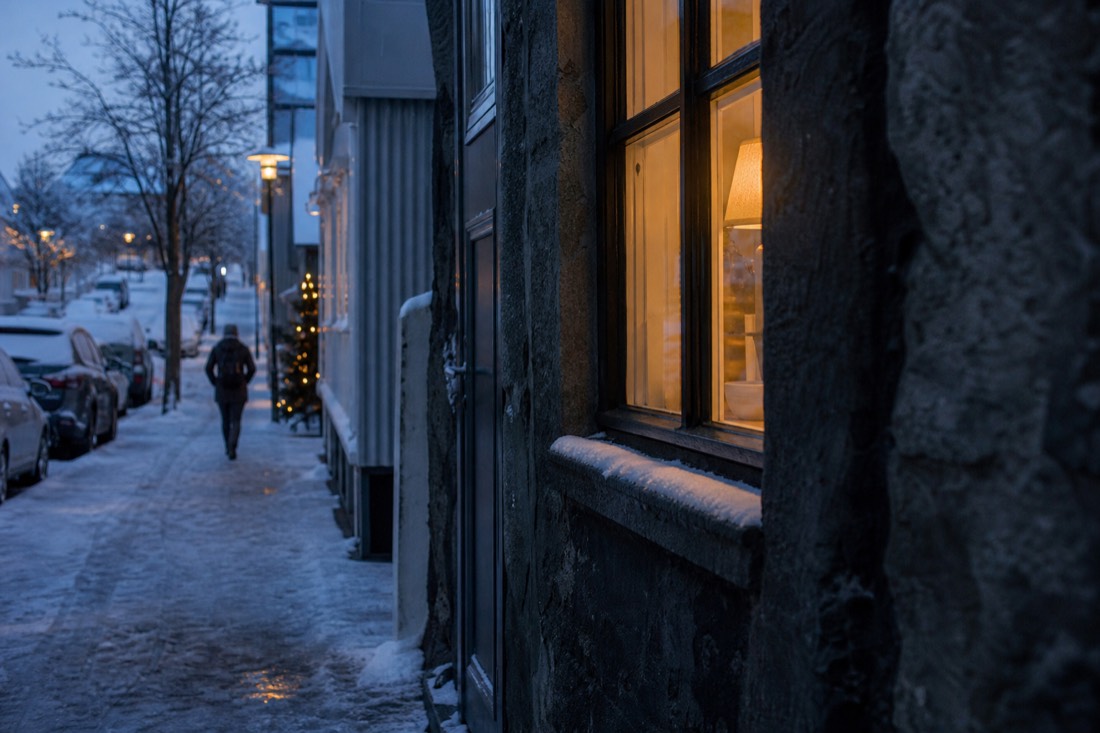
The light is the other half of it, and it does something to your sense of time. In deep winter the sun does not rise so much as slide along the horizon, so the whole day reads as one extended sunrise turning into one extended sunset, with a couple of hours of low gold in the middle if the cloud allows. You lose your instinct for what o'clock it is within about two days. Breakfast in the dark and dinner in the dark stops being strange remarkably fast.
Then there is the sound, which nobody writes about. Iceland in winter is quiet in a way that unsettles city people, and the quiet is broken by wind rather than by traffic, so it comes and goes with the weather instead of the hour. Inside a guesthouse you hear the building working. Outside, at a waterfall, you hear nothing but water and air.
The emotional shape of a first trip is fairly consistent, and it is worth knowing so you do not think it is going wrong. Day one is disorientation, because everything is dark and expensive and the airport bus takes longer than you expected. Day two is the first real sight and the first proper wind, and it is usually the day the trip clicks. Somewhere around day four comes tiredness that has nothing to do with walking, just cold and early starts and long coach legs stacking up. And then, on some evening you did not plan, the sky opens or the cave turns out to be blue all the way through, and that is the memory you fly home with. Dressing for this properly matters more than any other preparation, which is what what to pack for Iceland in winter is for, and why nobody wears jeans in Iceland explains the single most common clothing mistake.
How much can the weather change in one day?
Enough to reorder your itinerary twice before lunch. Icelandic winter weather is not extreme in temperature, it is fast, and wind is the variable that closes roads and cancels departures. A morning of flat calm and a whiteout by mid-afternoon is an ordinary day rather than a memorable one.
The mechanism catches visitors out because it is not what "snowstorm" means at home. Iceland does not need falling snow to shut a road. It needs wind, and loose snow already on the ground, which then lifts and streams across the tarmac until nobody can see the verge or the markers. That is why the closure map can turn red under a clear blue sky, and why the wind number on the Icelandic Met Office forecast tells you more about your day than the temperature does.
Rain is the other underrated one. At around two degrees Iceland produces rain rather than snow, that rain lands on frozen ground, and by evening every path is a skating rink. Ice underfoot causes more visitor injuries than cold does. It also explains why guides look at your boots, and why any glacier hiking departure puts crampons on you before it lets you onto the ice.
The upside runs on the same clock. A front that ruined the morning can clear completely by nine at night, which is precisely how aurora hunting works here: operators watch two forecasts, cloud cover and solar activity, and drive to wherever the gap is. Weather that changes fast is weather that changes in your favour half the time, and that is genuinely why a free retry night is worth having on your first aurora booking.
| What the weather is doing | What it looks like where you are standing | What it changes |
|---|---|---|
| Wind, no precipitation | Blue sky, and a car door you cannot hold | Exposed stops get short, coastal roads get watched |
| Blowing snow off the ground | Ground-level whiteout under a clear sky | Roads close, coaches turn back, this is the classic one |
| Rain at around two degrees | Grey, wet, deceptively mild | Ice everywhere by evening, paths before roads |
| Heavy snowfall | The postcard version, briefly | Slower driving, later returns, rarely a cancellation on its own |
| Whiteout on the South Coast | Marker posts and nothing else | The day is called off, and correctly |
| Clear and cold at night | Stars, and cold that finds your gloves | The best aurora conditions of the trip |
| A front clearing at dusk | An ordinary evening turning extraordinary | The night the coach goes out and everyone is glad |
What does it actually mean when a tour is called off?
It means somebody who drives that road for a living has decided today is not the day, usually early in the morning and usually by message. Operators reschedule or refund their own weather cancellations. What it does not mean is that your trip is broken, because the freed day is easier to fill here than almost anywhere.
The vocabulary is worth learning, since three different things get described with the same word. A cancellation means the departure is not running at all. A reschedule means it is running on a different day and you are on it. A change on the day means the tour is going but the route has been reordered or a stop dropped, which is not a cancellation and is not compensated, because it is the guide doing exactly what you are paying a guide for.
Timing follows a pattern. Decisions on long-distance day tours tend to come early, before an operator commits a coach and a driver to a five-hour road, and decisions on evening aurora departures come late, because the sky can change between six and nine. If you have given the operator a phone number that works in Iceland, you hear about it. If you have not, you find out at the pickup point in the dark, which is the avoidable version of a bad morning.
What you do with the day is the part that separates a good trip from a sour one. Reykjavík absorbs a cancelled day well: the pools run in almost any weather, the museums are indoors by definition, and the geothermal lagoons operate through conditions that close mountain roads. The honest account of one of those days is in Reykjavík when your tour gets called off. Sleeping out in the country, the same day is much longer, which is one more argument for reading where to stay in Iceland in winter before you commit to a rural base.
| What you are told | What it usually means | What you do next |
|---|---|---|
| Cancelled, weather | The operator has pulled the departure | Take the reschedule if a day remains, otherwise the refund |
| Moved to another day | The tour runs, on a date they offer you | Check it against your flight, then say yes quickly |
| Route changed on the day | Stops reordered or one dropped for conditions | Nothing, this is the guide doing their job |
| A stop cut short | Wind or ice at that particular site | Stay with the group, the call is about safety not schedule |
| Road closed by the authorities | Nobody is driving it, tour or not | Check road.is and rebook, no operator can override this |
| You cancel yourself | Free up to 24 hours before departure on these listings, except the Blue Lagoon transfer product at two days | Cancel inside the window rather than not turning up |
| The aurora coach went out and saw nothing | The sky did not perform, which is not a cancellation | Use the free retry night if the listing carries one |
What do first-timers get wrong about Iceland in winter?
Four things, every year: that it will be brutally cold, that the aurora is close to guaranteed, that the days are fully dark, and that a hire car and an open mind will handle the rest. The temperature is mild, the sky owes you nothing, there is real daylight, and winter driving here is its own skill.
The cold misconception is the harmless one and it produces the wrong luggage. People arrive from Toronto or Chicago expecting worse than home, find 0.5°C in January, and conclude the warnings were overdone. Then they stand on a headland in a wind that goes through a fashionable coat and understand what was actually being warned about. Windproof outer layers, waterproof boots, and no cotton. That is the whole lesson.
The aurora misconception is the one that causes real disappointment, and it is fed by every photograph you have ever seen. The season runs from late August to late April and is strongest from October to February, but a season is a window rather than a promise. You need solar activity and a clear sky on the same night, neither of which any operator controls, which is why three nights in the country is the minimum that deserves the word plan.
The darkness misconception cuts the other way and it costs people trips they would have loved. Iceland does not have polar night. Reykjavík gets about four hours of daylight at the December solstice, roughly five and a half in January and about eight and a half by February, and the daylight hours guide breaks that down hour by hour. It is a short day, not an absent one.
The driving misconception is the expensive one. Highland F-roads are shut for the whole winter, closures on the ring road are common, and official advice favours guided travel in the dark months for good reason. None of that makes self-drive impossible, and plenty of people do it well with studded tyres and a 4x4, but it does make it a decision rather than a default. Work through it properly in self-drive versus guided tours instead of finding out on a January morning.
| What first-timers assume | What is actually true | What to do instead |
|---|---|---|
| It will be brutally cold | About -1°C to 5°C in Reykjavík, averaging 0.5°C in January | Pack for wind and rain, not for deep freeze |
| The aurora is basically guaranteed in winter | Needs solar activity and clear sky together, never promised | Give yourself three or more nights and a retry option |
| The days are completely dark | About 4 hours at the solstice, 5.5 in January, 8.5 in February | Plan one thing per day in December, two in February |
| Iceland is empty in winter now | 119,000 arrivals through Keflavík in January 2026, 147,000 in February | Book the season-limited tours before you fly |
| We will hire a car and improvise | F-roads shut all winter, closures common, guided is the official steer | Decide deliberately, and price winter tyres and 4x4 |
| The ice cave is near Reykjavík | Jökulsárlón is about 380 km away, roughly five hours each way | Sleep east or take a package that includes the nights |
| The volcano makes the country unsafe | Nine eruptions on Reykjanes since December 2023, none closed Keflavík | Check current status before a Reykjanes day, then carry on |
| We should bring cash | Cards and tap-to-pay work essentially everywhere, tipping is not expected | Bring a card, drink the tap water, skip the exchange desk |
What does a winter week actually cost?
Winter is Iceland's cheap season, which does not make it cheap. Budget roughly 3,000 to 5,000 ISK for a restaurant meal, 25,000 to 40,000 ISK for a Reykjavík hotel night, and 250 to 300 ISK per litre of petrol. Tours are the other big line, and low season prices them below summer.
| Item | Typical range | Note |
|---|---|---|
| Restaurant meal | 3,000 to 5,000 ISK | per person, before drinks |
| Beer | 1,200 to 1,500 ISK | in a bar, not a shop |
| Petrol, one litre | 250 to 300 ISK | relevant only if you are driving |
| Reykjavík hotel night | 25,000 to 40,000 ISK | varies hard by date |
| City bus fare | 500 to 1,000 ISK | Reykjavík local routes |
Two newer costs surprise returning visitors. Iceland reintroduced an accommodation tax in 2024, and several natural sites now charge for parking, so the "free waterfall" is not always free any more. Everything else is easy: the currency is ISK, cards and tap-to-pay work essentially everywhere, tap water is excellent and free, and tipping is not expected. US, UK, Canadian and Australian passport holders need no visa for a short stay under Schengen's 90/180 rule, and while ETIAS has been announced it is not yet operational.
The one saving worth engineering is the drive east. Doing Jökulsárlón as a day trip burns ten hours of fuel and daylight you do not have in January. A costed comparison of both approaches sits in the winter trip cost guide, and the arithmetic usually favours sleeping closer to the ice.
From Reykjavík: South Coast Waterfalls, Glacier and Black Beach Day Tour
Sequence it the way the guide says: the cave and the first aurora night early, the South Coast day right behind them, and the lagoon held back for weather. The big day cancels free up to 24 hours out, so checking dates now costs nothing.
10 to 12 hours · English
Check travel dates with GetYourGuide below.
None of these experiences matches that choice. Adjust your preference or reset to the general recommendation.
Compare Options And Plan Your Trip
- The natural ice cave
- Season-limited to roughly November to March; the irreplaceable one.
- The first aurora night
- Early in the trip so the retry night still means something.
- The big South Coast day
- The 10 to 12 hour anchor the rest of the trip bends around.
- A weather-proof lagoon slot
- Runs in conditions that close mountain roads; the reserve card.
- The everything-handled package
- Cave, coast and circle with the beds between them.
Before Booking